Silver “toilet spoon” from Roman times has been discovered in Wales
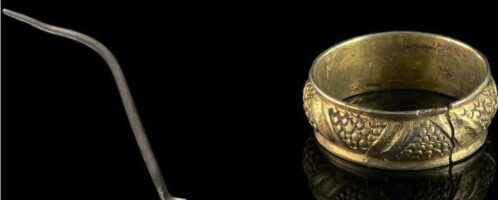
A silver ‘toilet spoon’ from Roman times has been discovered in Wales. The silver spoon was used to scoop cosmetics and medicines by ancient physicians.
If you have found a spelling error, please, notify us by selecting that text and pressing Ctrl+Enter.
A silver ‘toilet spoon’ from Roman times has been discovered in Wales. The silver spoon was used to scoop cosmetics and medicines by ancient physicians.
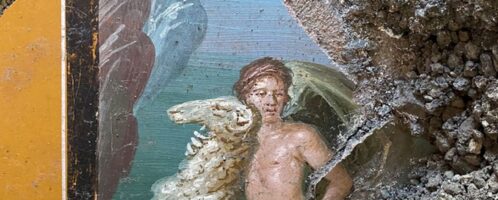
A 2,000-year-old “Tomb of Cerberus” with many very well-preserved frescoes was discovered in Italy. Initial assessments suggest that the tomb dates back to approximately 2,000 years ago, from the Republican and Imperial Roman era.
In 2019, an elephant bone was discovered in Cordoba (south of Spain), which caused a great stir among scientists. Some people suspect that it could have belonged to one of the animals from the time of the Second Punic War.
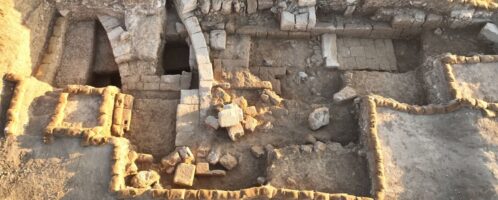
Traces of an amphitheater were found on the site of a former Roman legionary fort in Galilee (Israel). Interestingly, fragments of the walls have survived and are still painted red.
In what is now southern Jordan, at least three Roman marching camps were discovered, which were probably established during the military campaign towards Arabia.
The long-awaited archaeological work begins at the Roman fort of Magna in northern England. The excavations are expected to last 5 years and will probably bring a lot of new information about Hadrian’s Wall.
Archaeologists have discovered a Roman palace and settlement near the remains of a Roman legionary camp in Xanten (northwest Germany). The structure is 2,000 years old and was probably the seat of the governor.
Near the Scottish city of Stirling, the remains of a Roman road were found, the first route of which was marked in the 1st century CE, during the military campaigns of Julius Agricola in Caledonia.
Off the west coast of Sardinia, scientists discovered a Roman treasure consisting of 30,000 to 50,000 coins. Those date to the beginning of the 4th century CE and they are largely made of bronze – Roman folles.
Roman mosaic showing a pigeon drinking from a kantharos vessel (popular among the Greeks and Etruscans) was discovered on via Appia. The object was made of black and white pieces of stone and decorated the burial site. According to researchers, the mosaic is 1,800 years old.