
Chapters
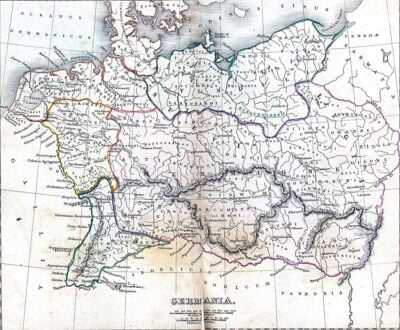
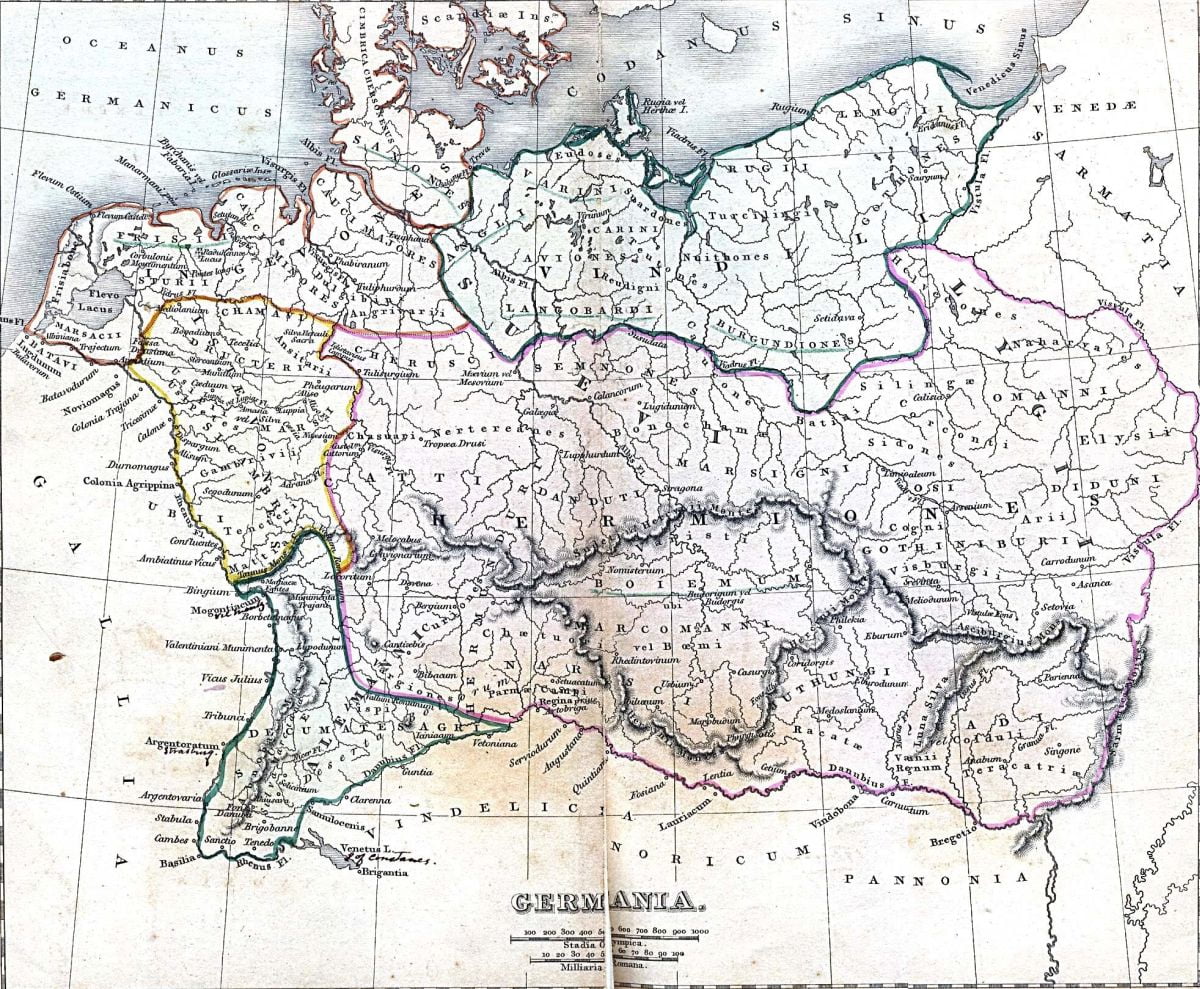
The name Germania was given by the Romans to the areas east of the Rhine and north of the upper and middle Danube. The term “Germans”, the Romans borrowed from the Gauls, but no one knows where the name really came from, or why the Gauls called their neighbours across the Rhine so. Germania was inhabited mainly by Germanic tribes. The Germanic tribes themselves are well described in the 1st century CE, Tacitus “Germania” (De origine et situ Germanorum, literally “On the Origin and Country of the Germans”). This is one of the tribes that was never completely subjugated to the Roman Empire. The Romans managed to cross the Rhine only a few times, but they never managed to subjugate the territory of today’s Germany for a long period of time. The Rhine became the contractual border of Rome in the east, and no later emperor sought to expand the territory to the east. The provinces that were created were called: Germania Superior (Upper Germany) and Germania Inferior (Lower Germany), which were created at the end of the first century CE on the left bank of the Rhine.
The Germans were a group of Indo-European peoples separated at the turn of the 2nd and 1st millennium BCE in the Jutland Peninsula, Schleswig-Holstein, Danish islands and southern Scandinavia. From these areas, the Germans began to expand to the north (Scandinavia) and south (Germania). The West Germans reached the Rhine and the upper Danube. The tribes that can be distinguished are: Ingweoni (tribes of the Angles, Varynes, and Frisians), Istewoni (tribes of the Batavians, Cheruscans, Ubii and others) and Herminoni (tribes of the Suevi, Marcomanni, Quadi, Lombards and others). East Germans: Goths, Gepids, Vandals and others reached the shores of the Black Sea.

Germania covered an area of about 500,000 square kilometres, between the Baltic Sea from the north, the Danube from the south, the Vistula from the east and the Rhine from the west. The population of these lands in the 1st century BCE was about 5 million people.
The first contact between the Germans and the Romans began at the end of the 2nd century BCE The Cimbri and Teutons on northern Italy stopped in 101 BCE Gaius Marius. In the 1st century BCE, the Germans occupied central Europe and fought the Romans, who sought to control the area between the Rhine and the Elbe. In 15 BCE, Roman legions occupied southern Germany through the victorious campaigns of the adopted sons of Emperor Octavian Augustus: Tiberius and Drusus. In 7 CE, Publius Quinctilius Varus was appointed governor of Germany, from whom successes and the creation of the province were expected. For the position of commander of the auxiliary forces, he appointed a certain Arminius – a young nobleman who was a German brought up in the land of the Romans. As it turned out, the years spent outside his homeland did not deprive him of his patriotism. Having gained the trust of Varus, he lured the Roman army into a trap, which resulted in the famous defeat of the Romans in 9 CE in the Teutoburg Forest. Six years later, in CE 16, the great general Germanicus defeated Arminius’ forces, found the site of defeat, and buried the remains of the three legions.
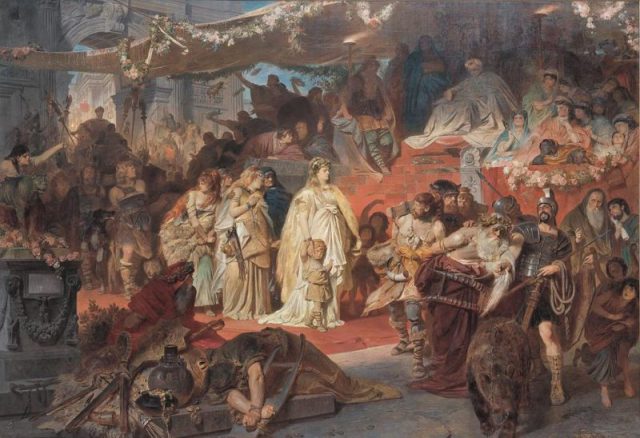
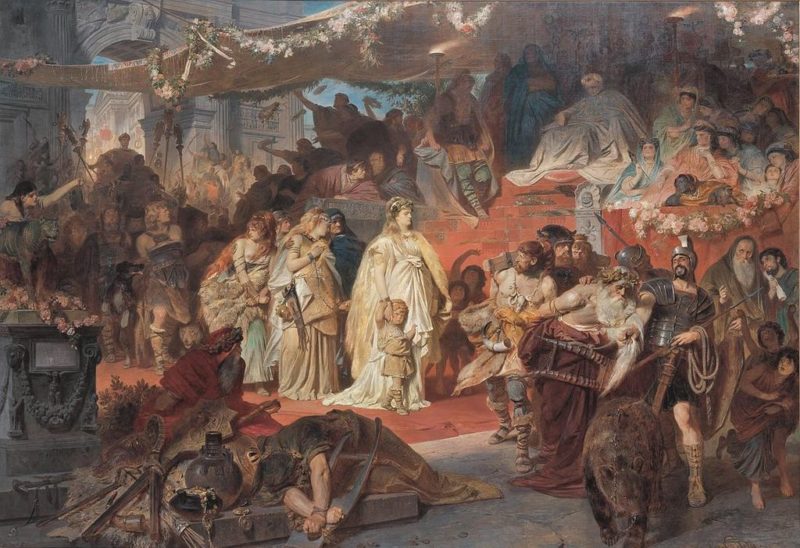
In the 1st and 2nd centuries CE, the Romans launched expeditions against the Germans, without much success; using a policy of intrigue and bribery, however, they managed to impose their supremacy on the frontier tribes of Frisians, Batavians, Cheruscans, Marcomanni and others. The Romans around 75 CE located the border and based it on many forts, including Waldmoessingen and Rottweil. The long-term proximity of Rome influenced the economic, social and cultural development of the Germans, which was manifested in the adoption of many achievements of an ancient civilization.
Over time, Rome began to weaken. In the years 260-455 CE, we are dealing with the growing pressure of the Germans, who forced the Romans to settle more tribes in the border areas and to accept barbarians into the army. At the end of the fourth century, Hunnic pressure forced the Goths, and then other Germans, to new and successful attempts to break through the Roman frontiers; great migrations of German peoples. led to their gradual settlement in the territory of the Roman Empire and the establishment of independent kingdoms, including: Vandals in Africa, Suvia and Visigoths in Spain, Franks and Burgundians in Gaul, Ostrogoths and Lombards in Italy, Angels, Saxons and Jutes in Britain; outside of Britain, where the invaders formed the ethnic basis of the English nation. The settlement of tribes within the borders of the Empire led to the creation of future European states.
In 410 CE, the capture of Rome by the Visigoths took place; and in 455 by the Vandals. It was the triumph of the Germans over the Romans and a symbol of the changing times.