
Chapters
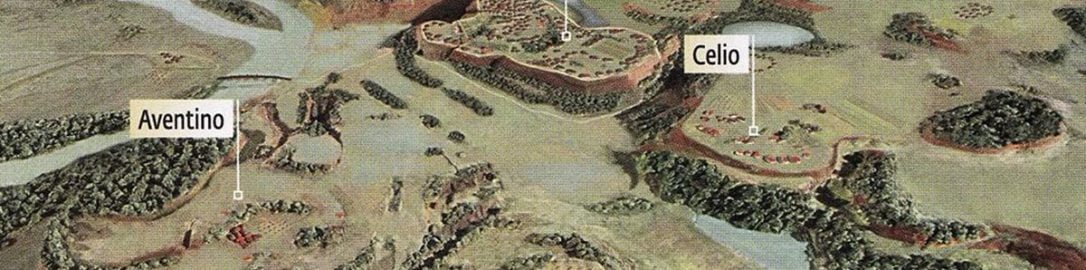
Origins of ancient Rome were one of the most discussed historical problems of the second half of the 20th century. Recent years and efforts of scientists in the field of archeology and the interpretation of historical monuments of ancient Rome, brought a lot of new material and prompted a change of perception, especially when it comes to the chronology of the early history of Rome.
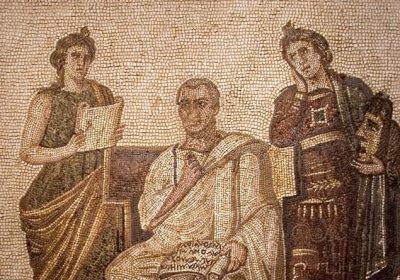
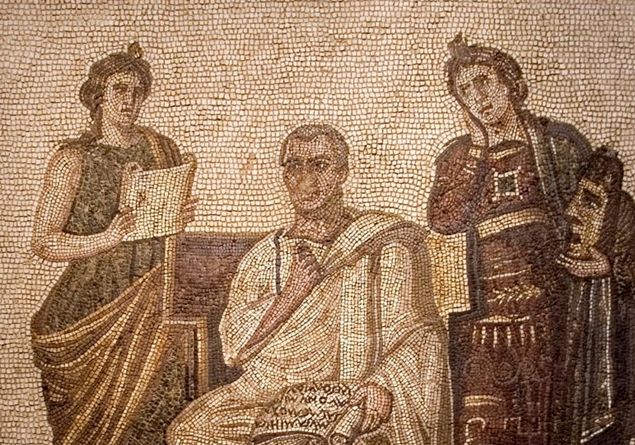
One of the main problems with the chronology of Rome was that the Romans themselves based their ideas about the creation of Rome on literary versions of tradition, established in the days of Augustus. This resulted, inter alia, because they wanted to prove to themselves and their posterity their noble roots of the Romans so much that they mixed facts with reality, although they tried to precisely define the date of founding Rome, as well as the history related to this event, with the smallest details. Livy and Dionysius of Helicarnass played a special role in their investigations, as well as poetry in which the most important role was played by Aeneid of Virgil. The ancients also made various attempts to juxtapose the Roman chronology with the Greek one based on the Olympics. In particular, it was difficult to calculate the period between the legendary arrival of Aeneas after the fall of Troy (1180 BCE) and the founding of Rome.
According to Virgil Rome was founded in 848 BCE, set this date to 814 BCE considering that both Rome and Carthage were founded. Fabius Pictor; proposed the year 748, this chronology was adopted by Dionysius of Halicarnassus, Cincius Alimentus believed that Rome was founded in 729/728 BCE. Proposed by M. Terentius Varro (1st century BCE) date of founding Rome – 754/3 BCE (third year of the VI Olympiad) it was adopted by most Roman historians of the imperial era. The chronology of Livy in Ab Urbe condita was based on it, and in this way, the years counted from the foundation of the city were later recalculated. It should be added here, however, that the Varro date is not based on any documentary basis, but only speculated. The starting point for these calculations was the adoption of a certain date for the beginnings of the Roman Republic. Roman annals assumed that the royal period was 244 or 245 years, which corresponds to 7 generations of 35 years each. Since Fabius Piktor adopted the year 504 as the date of the establishment of the republic, Romulus’ founding of Rome would fall on the year 748, Warro assuming that the Republic was founded in 509/508 took the year 754/753 as the date of the beginning of Rome. What image of the origins of Rome was captured by Roman journalism?


She tried to to link the city’s prehistory to the Trojan War. The Trojan hero Aeneas was supposed to come to Italy after the fall of Troy, he set out with his father Anchizes, who died on the way. Aeneas settled in Lazio, where he married the daughter of the local ruler, King Latinus, Avalanche. He then founded his own city-state, which he named after his wife, Lavinium. The descendants of Aeneas were to rule in the newly founded city of Alba Longa in the Albanian Mountains: one of them, King Numitor, was removed from the throne by his brother Amulius. In order to avoid revenge on the part of Numitor’s children or grandchildren, Amulius had his son executed, and he entrusted his daughter Rea Sylwia to the goddess West, whose priestesses had to take chastity vows. Nevertheless, Rea Sylwia gave birth to twins, two boys: Romulus and Remus. She claimed their father was the god Mars. King Amulius, wanting to get rid of these children, ordered them to be thrown into the Tiber. The twins, however, were miraculously saved, the wave washed them ashore; and they were fed by a she-wolf in the Lupercal Cave on the slopes of Palatine Hill. He was raised by Romulus and Remus, a royal shepherd. As they grew up and found out about their origins, they punished Amulius severely and restored the throne in Alba Longa to their grandfather, Numitor. The young men themselves decided to found a new city in the place of their miraculous rescue, first seeking advice from the gods based on prophecies from the flight of birds. Remus had six vultures, but Romulus had twelve. Romulus delineated the new city of Rome (Roma) taking the Palatine Hill as the center, and then plowed Etrusco ritu – according to Livius’s description – border around the city. When