If you have found a spelling error, please, notify us by selecting that text and pressing Ctrl+Enter.

Articles (Unknown facts)

Unknown facts from Ancient Rome reveals less obvious, surprising, and rarely discussed aspects of the ancient world. In this category, you’ll find historical curiosities, little-known events, unusual customs, and facts that often escape school texts. Articles based on historical sources and scholarly research present the Roman Empire from a different perspective. This is an ideal place for readers who want to expand their knowledge of antiquity beyond the familiar norms.

Romans in the Baltic Sea?

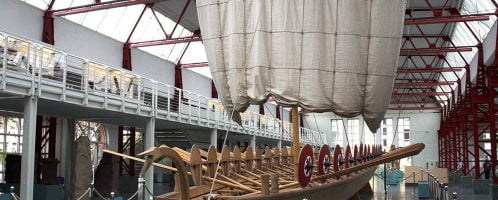
The Baltic Sea is not far from the former theatre of Roman military campaigns and research expeditions. How did the Romans imagine its location and coastlines? Have they ever influenced the reservoir over which present Poland lies?

Classis Germanica

Sergius Orata – famous fish breeder

Sergius Orata was an entrepreneur whom Pliny the Elder mentions several times in his work Natural History. On the basis of these mentions, some researchers concluded that Orata was the inventor of the so-called hanging baths, which were equated with the system of heating the floor and swimming pools in baths – hypocaustum. Nothing could be more wrong. Hypocaustum is a Greek invention, only slightly improved by the Romans, while Sergius Orata was a fish farmer and it was in this field that he was an innovator.

Fish on the Roman mosaic

Why are ancient monuments so deep underground?

Regularly, from time to time, we receive information about the discovery of ancient monuments, including those that date back to Roman times. We can see photos showing mosaics hidden a few meters below the road, pavement or the present ground level. How is this possible?

In 2020, an exceptionally well-preserved Roman mosaic was discovered under a vineyard near the city of Negrar (northern Italy)

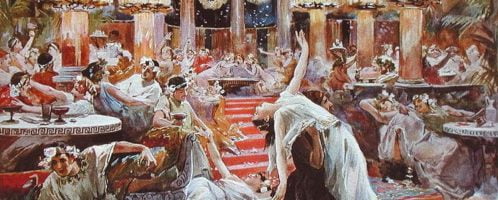
“Trimalchio’s dinner” – work showing richness of Roman feasts

“Trimalchio’s dinner” (Cena Trimalchionis) is a preserved fragment of the Roman novel Satyricon, which in a mocking and realistic way depicts Roman society from the middle of the 1st century CE. The work itself it has been preserved only fragmentarily, and to this day there are disputes about its authorship.

Ulpiano Checa y Sanz, Banquet in Nero's Palace

Did Roman legionaries suffer from post-traumatic stress disorder?

Post-traumatic stress disorder (PTSD) is a mental disorder that occurs after intense stress (caused by a traumatic event, life-threatening, or killing another person) and which is not assimilable by the individual. Could Roman soldiers fighting in antiquity suffer from such post-traumatic stress?

The fight of the Romans with the barbarians

Poena cullei – not only symbolism

The purpose of this text is to introduce a little symbolism and also to take a closer look at one of the most terrifying punishments of the Roman judiciary. Poena cullei, or the so-called punishment of the sack, is most commonly known as the one suffered by patricides in ancient Rome. The condemned man was sewn up in leather sackcloth with the company of four animals – a dog, a monkey, a snake and a rooster. Then the sack, along with the live contents, was thrown into the river. But this is just one of the harsh faces of Roman justice administered through poena cullei. What else do we know about it?

Poena cullei

Gabiniani

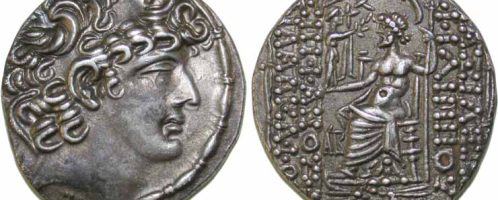
Gabiniani – this name was related to the group of Roman mercenaries fighting for Egyptian kings – Ptolemy XII and Ptolemy XIII. This term was derived from the name of the governor of Syria, Aulus Gabinius, who left in Egypt part of his troops participating in the recovery of the throne for Ptolemy XII.

Aulus Gabinius coin

When was ancient Rome really founded?

In general history, there is understanding that Rome was founded in 753 BCE by the legendary king Romulus, who according to the Romans was the son of Mars – the god of war and the priestess of the goddess Vesta, who was to descend from the family of Aeneas himself. The real date of founding Rome was not known fully even for Romans. Furthermore, archaeologists and researchers conducted their own attempts to determine when the “Eternal City” was founded.

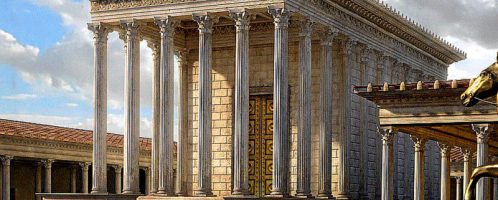
Visualization of the Temple of Venus the Mother of Mother at the Forum of  Caesar in Rome

Spelling error report

The following text will be sent to our editors: