Lost eagles of Roman army
The Roman army was one of the best in the world for a reason. However, despite many victories, this unbeatable machine also had numerous failures. However, the most shameful defeat took place when the legion lost its eagle.
If you have found a spelling error, please, notify us by selecting that text and pressing Ctrl+Enter.
Army is a collection of curiosities about the ancient Roman army and its functioning. This category includes lesser-known facts, interesting information, and unusual details about the legions, weaponry, discipline, tactics, and daily life of soldiers of the Roman Empire.
The Roman army was one of the best in the world for a reason. However, despite many victories, this unbeatable machine also had numerous failures. However, the most shameful defeat took place when the legion lost its eagle.

The primary method of attacking the Roman fleet was by boarding. Rome developed its power through a land army, therefore naval combat was a problem for a long time, and lack of skill often led to defeats. The solution was the “raven” (corvus), a ramp equipped with two or one spike (resembling a bird’s beak, hence the name) for boarding. It allowed for the introduction of the tactic of quickly jumping to the enemy and using the infantry force at sea.

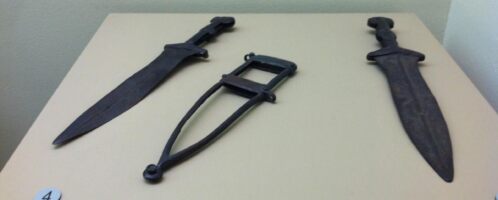
Ancient Romans, unlike modern Americans, did not think that citizenship automatically entitled them to possess sharp weapons. It was recognized that such freedom could lead to many dangers.
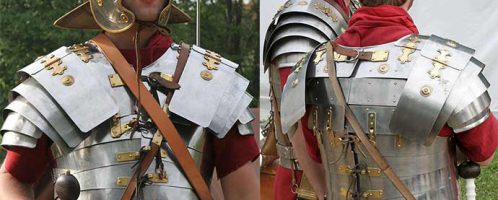
During the Civil War (49-45 BCE), Julius Caesar’s soldiers were regularly hailed by missiles ejected and fired by the Republican side. Caesar decided to improve the equipment of his legionaries.

The graphics show legionaries from the reign of Octavian Augustus. In mass culture, an erroneous image of Roman legions as a formation composed of equally equipped soldiers has formed.

What made Roman legionaries stand out was the ability to act in a group and fight in various weather conditions. In addition, they were disciplined, well-equipped, and of course perfectly trained and durable. So what did their training look like?

Romans used the testudo formation to protect themselves from the enemy’s fire. The legionaries resembled a turtle-covered shell – hence the name. It was a compact rectangular formation in which the legionaries (usually 27) from the first row and the sides of the formation held the shields in front of them or from the side of their exposed side, while the legionaries from the inner ranks held the shields horizontally above each other and over the legionaries of the first and side ranks, thus creating a shield of the whole formation covering themselves from enemy shots.