Sculpture showing standing lion
Sculpture showing a standing lion; made of limestone. The Roman object dates back to the imperial period; discovered in northern Italy. The artifact is located in the National Archaeological Museum of Naples.
If you have found a spelling error, please, notify us by selecting that text and pressing Ctrl+Enter.
Artifacts is a collection of curiosities dedicated to objects left behind by the ancient Romans. This category features lesser-known facts and interesting information about archaeological finds, such as tools, weapons, coins, inscriptions, and everyday objects, which provide a deeper understanding of life in the Roman Empire.
Sculpture showing a standing lion; made of limestone. The Roman object dates back to the imperial period; discovered in northern Italy. The artifact is located in the National Archaeological Museum of Naples.

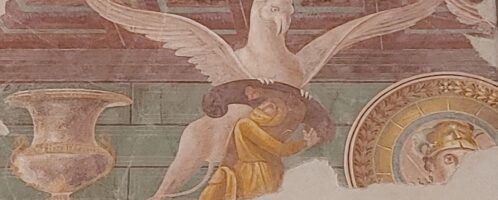
Roman fresco from the Villa of the Mysteries in Pompeii, showing a griffin. The scene shows a member of the Arimaspa people stealing gold from a griffin. The object dates back to the mid-1st century BCE. The artifact is located in the National Archaeological Museum of Naples.
Roman glass vessel in the shape of a gladiator’s helmet. The object was made in the Rhineland in the 3rd century CE. It is currently in the British Museum.

Roman sculpture of a woman’s head, probably the goddess Juno Sospita (savior). Its attributes were a goat’s skin with horns, which was on the sculpture’s head. The preserved head was part of a larger composition. The object dates back to the 1st century BCE and is made of marble. The artifact is located in Ny Carlsberg Glyptotek in Copenhagen (Denmark); probably discovered in Tusculum (Italy).

Quintus Sulpicius Maximus is an extraordinary figure from ancient Rome whose story is both inspiring and tragic. In 94 CE a young boy, only eleven years old, amazed Rome with his enormous knowledge and poetic talent, taking part in a prestigious literary competition organized by the emperor Domitian himself (reigned 81-96 CE). His interesting works, written in Greek, were full of maturity and beauty, which aroused admiration even among the most important intellectuals of the time.

Bust of Empress Livia, who lived in 58 BCE – 29 CE. The object was discovered in Asia Minor and dates back to the beginning of the 1st century CE. The artifact is located in Ny Carlsberg Glyptotek in Copenhagen (Denmark).

Venus on Roman sculpture. The object was discovered in the Baths of Hadrian in Aphrodisias in Asia Minor; dating back to the 2nd century CE. The artifact is located in Ny Carlsberg Glyptotek in Copenhagen (Denmark).
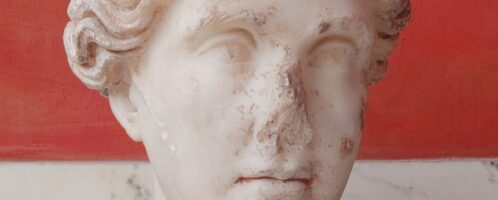
Roman woman depicted on a sculpture from the mid-1st century CE. The object was discovered in the Licinian tomb in Rome. The artifact is located in Ny Carlsberg Glyptotek in Copenhagen (Denmark).
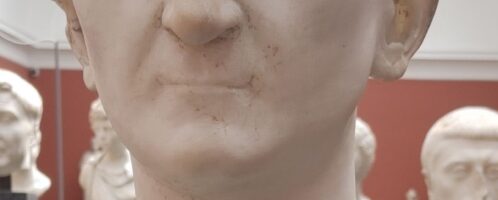
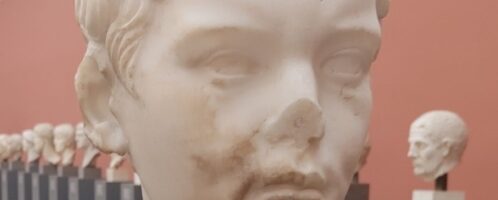
Sculpture showing a boy in his youth, from the 1st century CE. The object was discovered in the Tomb of Licinius in Rome. The artifact is located in Ny Carlsberg Glyptotek in Copenhagen (Denmark).
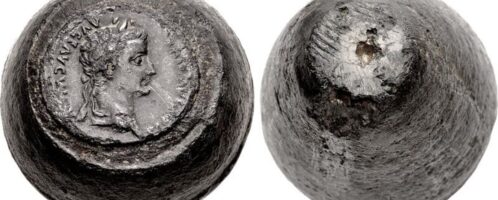
Roman stamp used to mint Roman coins. This is an extremely rare artifact of this type that has survived to this day. The object was discovered in Lugdunum (now Lyon, France), on the site of a former mint. Dated to 14-37 CE.