Decorative Roman table – cartibulum
Roman stone table (cartibulum), in the form of a single support, in the shape of a panther. The object was discovered at Pompeii; it is in the British Museum.
If you have found a spelling error, please, notify us by selecting that text and pressing Ctrl+Enter.
Artifacts is a collection of curiosities dedicated to objects left behind by the ancient Romans. This category features lesser-known facts and interesting information about archaeological finds, such as tools, weapons, coins, inscriptions, and everyday objects, which provide a deeper understanding of life in the Roman Empire.
Roman stone table (cartibulum), in the form of a single support, in the shape of a panther. The object was discovered at Pompeii; it is in the British Museum.

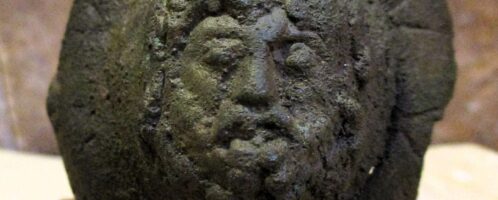
Roman army decorated iron shield boss (umbo) with IUPPITER (Jupiter). The piece is around 70mm wide and was originally attached to the wooden shield by nails – the holes remain visible. Object discovered in Britain.
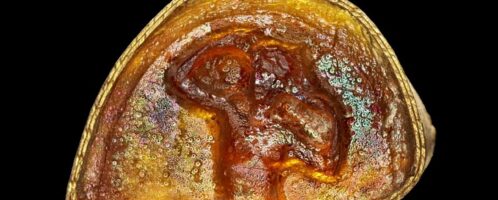
Roman glass cameo that shows the upper half of the goddess Venus Anadyomene (rising from the sea) touching her hair. The artifact is in The British Museum.
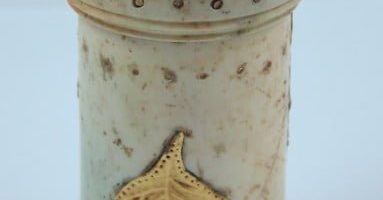
Pyxis is a cylindrical vessel with a lid, used in ancient Greece and Rome to store jewelry, cosmetics, perfumes and even poisons. Initially made of boxwood wood (Greek pyksos – boxwood), with time they began to be created from ceramics, silver, gold, pearl mass, turtle shell or ivory.
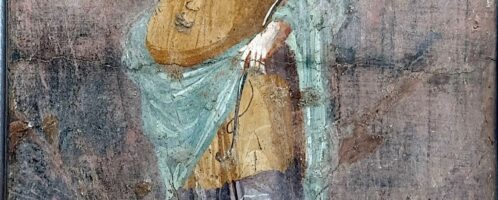
Roman fresco showing Diana, the goddess of hunting, animals and forests. Facility dated half of the first century BCE; discovered in Pompeii. The artifact is located at the National Archaeological Museum in Naples..
Peristyl of the House of Menander in Pompeii is an impressive atrium surrounded by a colonnade, which belonged to one of the richest houses in the city. An interesting fact is that during excavations, over 100 silver vessels hidden in a wooden chest were discovered there – probably the owners tried to protect them against the disaster caused by the outbreak of Vesuvius in 79 CE. The house owes its name to the fresco depicting the Greek playwright Menander, although it is not known if he really had any connection with the owners of the residence.

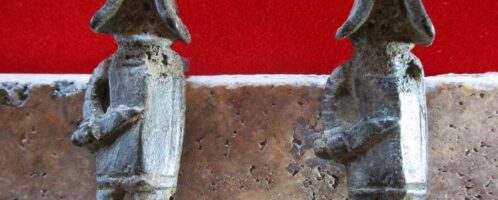
Pair of finely detailed bronze Murmillo Gladiator brooches. The figurines are 5 cm high and show such details as the characteristic murmillo helmet, gladius, scutum and manica (shoulder).
Helmet of a Roman legionary who was discovered in Dacia (current Romania). The building was discovered in 1968 at the Roman camp of legion IV Flavia Felix . The helmet has the cheek covers, a protective roof and neck cover. The artifact is located at the Adamclisi Museum (southeast Romania). Dated to the early second century CE.

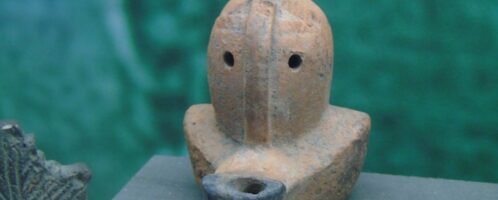
Roman terracotta olive olive lamp in the shape of a gladiator helmet. The object is over 1900 years old and was discovered in the tomb at Via Appia, outside Rome.