
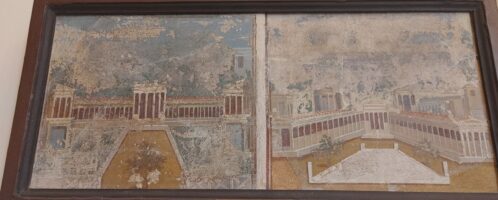
Roman frescoes showing seaside villas
Roman frescoes showing seaside villas. Objects dating back to the 1st century CE; discovered in Pompeii. The artifact is located in the National Archaeological Museum of Naples.
If you have found a spelling error, please, notify us by selecting that text and pressing Ctrl+Enter.
Artifacts is a collection of curiosities dedicated to objects left behind by the ancient Romans. This category features lesser-known facts and interesting information about archaeological finds, such as tools, weapons, coins, inscriptions, and everyday objects, which provide a deeper understanding of life in the Roman Empire.
Roman frescoes showing seaside villas. Objects dating back to the 1st century CE; discovered in Pompeii. The artifact is located in the National Archaeological Museum of Naples.
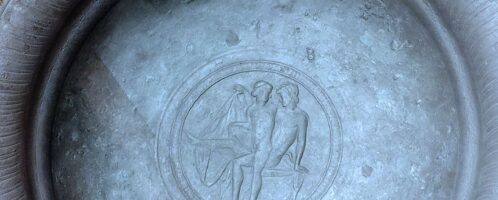
Roman vessel with an erotic scene. The object was made of bronze and discovered in Pompeii. Dated to the 1st century CE. The artifact is located in the National Archaeological Museum of Naples.
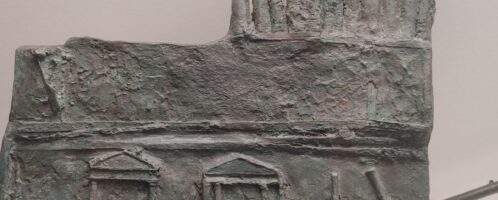
Roman musical instrument, the so-called Pan’s flute (according to Greek mythology, the god Pan and satyrs were supposed to play it). The object is made of bronze and dates back to the 1st century CE. Discovered in Pompeii. The artifact is located in the National Archaeological Museum of Naples.
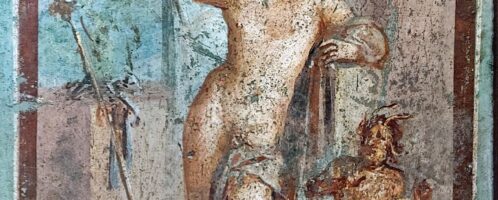
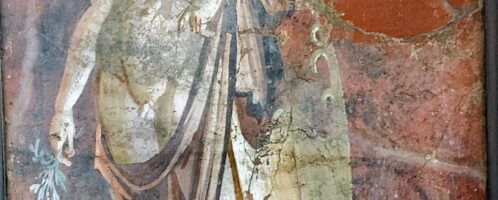
Roman fresco showing a hermaphrodite revealing her male-female sexual organs. At this sight, Pan (the god of forests and fields) nearby runs away. The object dates back to the 1st century CE; discovered in Pompeii. The artifact is located in the National Archaeological Museum of Naples.
Roman fresco showing standing Apollo with omphalos next to it – a stone covered with a net (symbol of the center of the universe). The object dates back to the 1st century BCE; discovered in Pompeii. The artifact is located in the National Archaeological Museum of Naples.
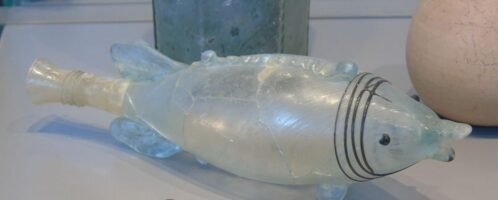
Roman glass vessel in the shape of a fish. The object is probably in the British Museum.
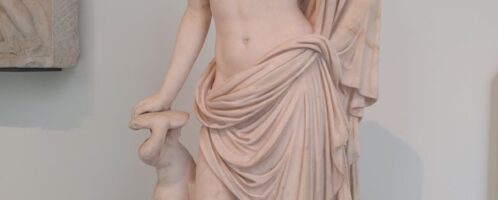
Roman sculpture of Venus with a dolphin, which is the symbolic animal of the goddess and a reminder of her birth in the sea. The object dates back to the 2nd century CE; a copy of a Greek original from the 2nd-1st century BCE. The artifact is located in the National Archaeological Museum of Naples.
Roman relief showing three scenes. In the middle part of the work we see the god Silenus (nature deity) surrounded by young Satyrs; in the left and right parts there are people taking part in the cult. The object dates back to the 1st century CE; the artifact is located in the National Archaeological Museum of Naples.

Sculpture of Venus Felix (“Happy”), goddess of love. The object dates back to the 2nd century CE, which is a Greek copy from the 2nd-1st century BCE. The artifact is located in the National Archaeological Museum of Naples.

Venus against the background of the amphitheater in Pompeii. The sculpture is located in the Archaeological Park of Pompeii and dates back to the 1st century CE.
