
Fragment of Roman fresco showing Nereid
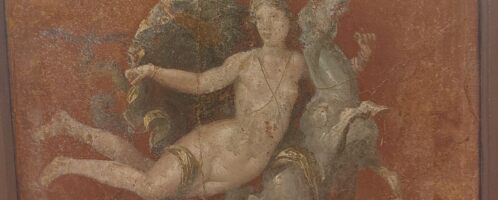
Detail of a Roman fresco showing Nereid, a sea nymph, on a seahorse. Object dated to the 1st century CE; discovered in Stabiae. The artifact is in the National Archaeological Museum in Naples.
If you have found a spelling error, please, notify us by selecting that text and pressing Ctrl+Enter.
Artifacts is a collection of curiosities dedicated to objects left behind by the ancient Romans. This category features lesser-known facts and interesting information about archaeological finds, such as tools, weapons, coins, inscriptions, and everyday objects, which provide a deeper understanding of life in the Roman Empire.
Detail of a Roman fresco showing Nereid, a sea nymph, on a seahorse. Object dated to the 1st century CE; discovered in Stabiae. The artifact is in the National Archaeological Museum in Naples.
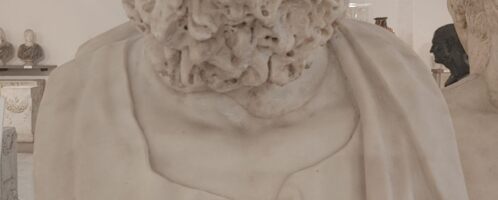
Roman sculpture of Homer, the Greek poet and singer; dated to the 2nd century CE. The object is a copy of a Greek original from the 1st century BCE. The artifact is in the National Archaeological Museum in Naples.
Roman fresco showing old Silenus and Maenad, who offers him a silver cup with wine. They were both companions of Bacchus, the god of wine. Object dated to the 1st century CE; it was discovered in Pompeii. The artifact is in the National Archaeological Museum in Naples.

Roman floor mosaic showing Medusa, a mythical monster who turned people to stone with her eyes. Object dated to the 1st century CE; discovered in Pompeii. The artifact is in the National Archaeological Museum in Naples.

Roman ram with rider with bells attached to it. The object comes from Pompeii. The artifact is in the National Archaeological Museum in Naples.

Emperor Octavian Augustus loved order in his country. For this purpose, he commissioned the construction of the so-called “golden milestone” (Milliarium Aureum) near the Temple of Saturn in the central part of the Roman Forum. Today’s researchers believe that the stone could have been a list of the most important cities of the Empire with the distance to them.

Roman fresco showing a sexual act. Object dated to the 1st century CE; possibly found in Villa Arianna in Stabiae. The artifact is in the National Archaeological Museum in Naples.

Bust showing the young Caracalla (188-217 CE), who was the Roman emperor reigning in the years 211-217 CE. Supported by praetorians and part of the army, he became famous for his cruelty and bloody spectacles. Caracalla was the son of Emperor Septimius Severus and brother Geta. The artifact is in the National Archaeological Museum in Naples.

Roman sculpture showing the young Hercules. The object is dated to the 2nd century CE and is a copy of a Greek original from the 4th century BCE. The artifact is in the National Archaeological Museum in Naples.

Roman fresco showing running horses. The object was discovered in Stabie; dated to the 1st century CE The artifact is in the National Archaeological Museum in Naples.
