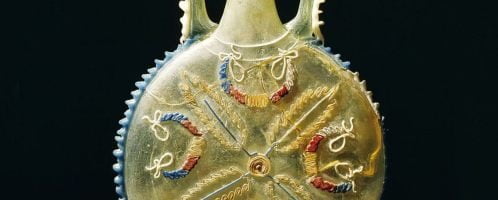
Beautiful Roman vessel preserved
A beautiful Roman vessel made of colourless glass has been preserved. The object is 27.5 cm high and dates back to the 3rd century CE. The artifact was found in Cologne, Germany.
If you have found a spelling error, please, notify us by selecting that text and pressing Ctrl+Enter.
Artifacts is a collection of curiosities dedicated to objects left behind by the ancient Romans. This category features lesser-known facts and interesting information about archaeological finds, such as tools, weapons, coins, inscriptions, and everyday objects, which provide a deeper understanding of life in the Roman Empire.
A beautiful Roman vessel made of colourless glass has been preserved. The object is 27.5 cm high and dates back to the 3rd century CE. The artifact was found in Cologne, Germany.
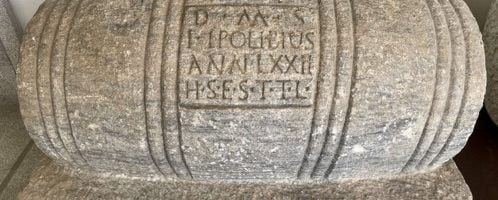
Roman barrel-shaped tombstone. The tombstone commemorates a certain Lucius Julius Polybius, who lived 72 years, and the inscription on the object reads “sit tibi terra levis”, that is, “let the earth rest lightly”. Naturally, the shape of the tombstone suggests that the deceased was probably related to the production or trade of wine.
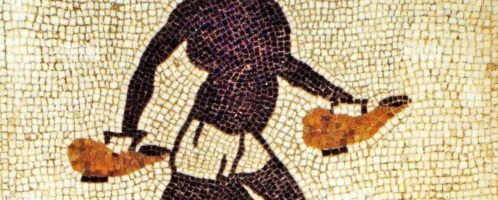
Roman mosaic showing a man carrying water dishes. The object marked the entrance to the caldarium (hot water pool) at Menander’s House in Pompeii.
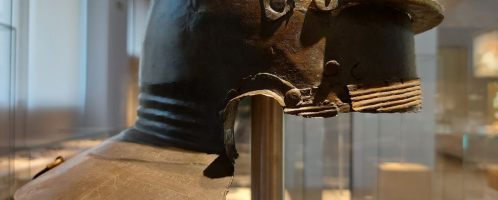
Roman Weisenau type legionary helmet, dated to the 1st century CE. The helmet is preserved without the cheeks. There is an engraving on the neck guard with the initials of the name of the soldier who wore it – Lucius Lucretius Celer. A Roman served in the centuria of Gaius Mummius Lolianus of the 1st Adiutrix legion.
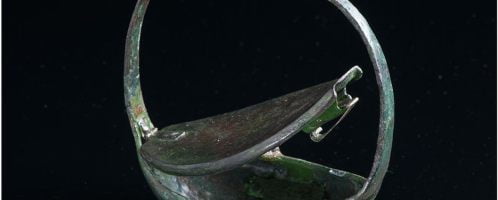
Ancient handbag made of copper alloy in which coins were carried. The object is dated to the 2nd century CE. To spend the money, the purse had to be removed from the shoulder. The artifact is in the Kurpfälzisches Museum in southwest Germany.
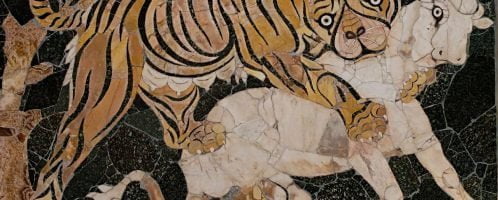
Amazing Roman mosaic showing a tigress attacking a calf. The object is dated around the 4th century CE; is in the Capitoline Museums in Rome.
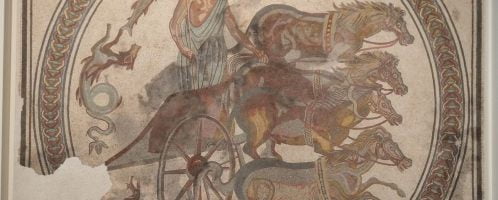
Roman mosaic showing “surprised” Neptune in a chariot. Object dated to the 2nd century CE. The artifact is currently in the Musee des Beaux-Arts et d’Archeologie in Besançon (eastern France).
Marble statue showing Hercules’ muscular torso. The object is dated to the 1st century CE and is a copy of a Greek original from the mid-5th century BCE. The sculpture is on display at the Ny Carlsberg Glyptotek in Copenhagen (Denmark).