Bust of Roman matron
Bust of Roman matron. The sculpture is in the British Museum.
If you have found a spelling error, please, notify us by selecting that text and pressing Ctrl+Enter.
Artifacts is a collection of curiosities dedicated to objects left behind by the ancient Romans. This category features lesser-known facts and interesting information about archaeological finds, such as tools, weapons, coins, inscriptions, and everyday objects, which provide a deeper understanding of life in the Roman Empire.
Bust of Roman matron. The sculpture is in the British Museum.

Roman fresco showing figs and bread. The object is in the British Museum.

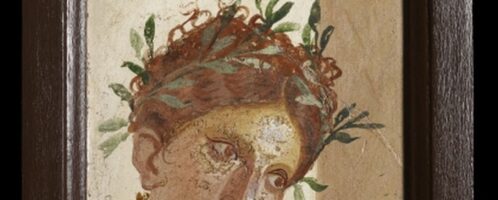
Roman fresco depicting the face of a woman from Herculanum. The object is located in The British Museum.
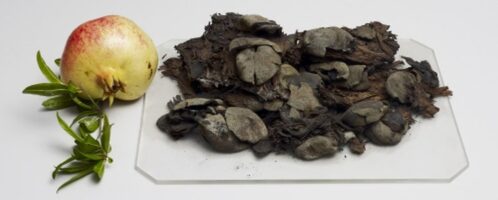
Charred remains of pomegranates from Oplontis, which was near Pompeii and was destroyed by the eruption of Vesuvius in 79 CE. The remains are in the British Museum.
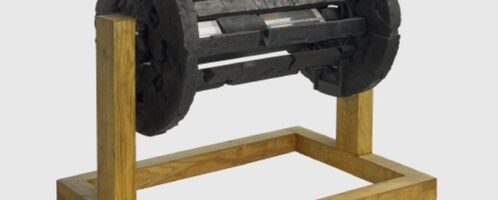
Partially preserved and charred wooden device for drawing water. The object was discovered in the so-called House of the Two Atriums, in Herculaneum. Artifact in the British Museum.
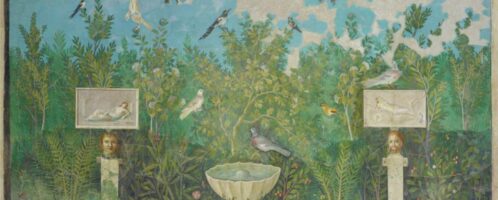
Fresco from a Roman room in the so-called House of the Golden Bracelet in Pompeii. The painting shows garden scenes. The find is in the British Museum.
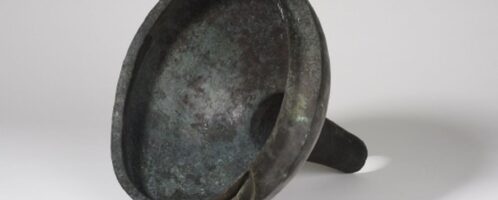
Roman bronze funnel, used to pour dry goods. The object is located in The British Museum.
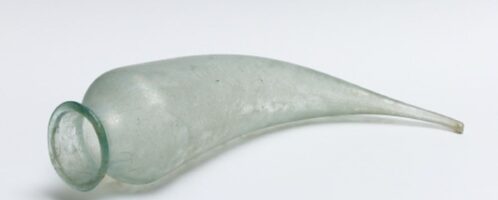
Glass drinking horn from Pompeii. The object is in the British Museum.
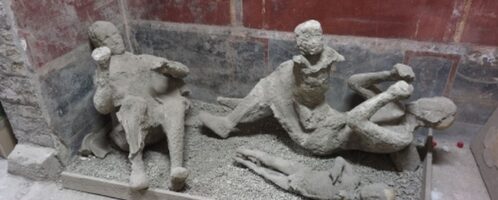
Casts of the remains of victims (two adults and two children) of the eruption of Vesuvius in 79 CE. The find was discovered in the House of the Golden Bracelet in Pompeii. It is currently in the British Museum.
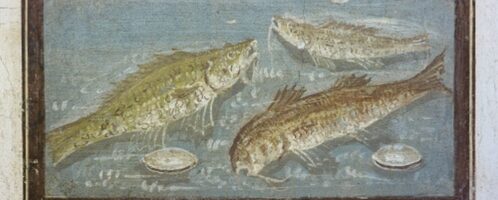
Fish on Roman fresco. The object is discovered in Pompeii. The artifact is located in The British Museum.