
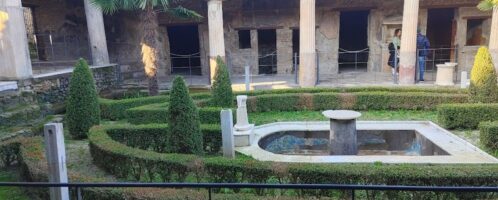
Peristyle in House of the Golden Cupids in Pompeii
Peristyle located in the so-called House of the Golden Cupids in Pompeii. This house was one of the most elegant in the city, as evidenced by the large interior garden.
If you have found a spelling error, please, notify us by selecting that text and pressing Ctrl+Enter.
The world of the ancient Romans was rich in extraordinary, and sometimes even surprising, facts. We draw our knowledge of Roman daily life, customs, and mentality primarily from works left by ancient writers and historians. It is thanks to them that we discover information that is astonishing today – sometimes even hard to believe. Below are some interesting facts that reveal a lesser-known and less obvious side of the Roman world.
I encourage you to submit your own suggestions and to report any corrections or inaccuracies.
Peristyle located in the so-called House of the Golden Cupids in Pompeii. This house was one of the most elegant in the city, as evidenced by the large interior garden.
Marble sculpture showing the muse Erato – the goddess of love poetry. The object dates back to the 1st century CE. Discovered in Pompeii; the artifact is on display in Pompeii.

Bust of Scipio Africanus the Elder. The artifact is located in the National Archaeological Museum of Naples.

Mars and Venus in a loving embrace on a Roman fresco. The object dates back to the 1st century CE; discovered in Pompeii. The artifact is located in the National Archaeological Museum of Naples.
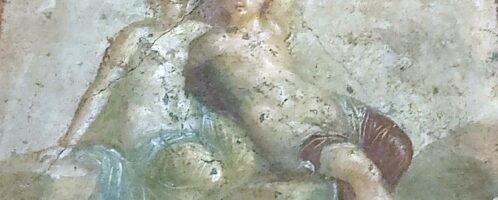
Roman wall fresco showing a garden scene. The object dates back to the early 1st century CE. Discovered in Herculaneum or Pompeii. The artifact is located in the National Archaeological Museum of Naples.

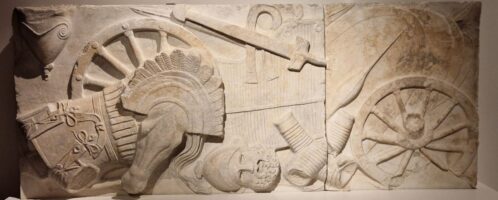
Marble relief showing fallen cataphracts and destroyed chariots. The object may be an artistic visualization of the defeat of the Seleucid Monarchy at Magnesia in 190 BCE. The artifact is located in the Pergamon Museum (Panorama) in Berlin (Germany).
Centaur with a lyre. Roman marble sculpture dating to the 1st century CE. The object was discovered in Oplontis. The artifact is located in the National Archaeological Museum of Naples.

Roman statuettes depicting two African boxers fighting. On their hands, the boxers wear antique gloves (caestus), made of leather and wicker, sometimes enriched with metal plates, blades or spikes to increase brutality. Artifact dating back to the 1st century BCE; located in The British Museum (London, England).

Roman mosaic depicting gladiators after a fight. On his knees is a defeated retiarius, a lightly armored gladiator fighting with a trident, with a pauldron and a net. The winner was the heavily armored warrior. The object dates back to the 3rd century CE; the artifact is on display at the Archaeological Museum of Verona (northern Italy).

Roman candelabrum, made of bronze, which once decorated the atrium of one of the Roman houses in Pompeii. The artifact is located in the National Archaeological Museum of Naples.
