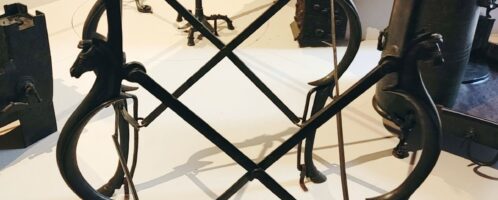
Roman table legs
Roman table legs. The object was made of bronze and decorated with horse heads. The object dates back to the 1st century CE; discovered near Vesuvius. The artifact is located in the National Archaeological Museum of Naples.
If you have found a spelling error, please, notify us by selecting that text and pressing Ctrl+Enter.
The world of the ancient Romans was rich in extraordinary, and sometimes even surprising, facts. We draw our knowledge of Roman daily life, customs, and mentality primarily from works left by ancient writers and historians. It is thanks to them that we discover information that is astonishing today – sometimes even hard to believe. Below are some interesting facts that reveal a lesser-known and less obvious side of the Roman world.
I encourage you to submit your own suggestions and to report any corrections or inaccuracies.
Roman table legs. The object was made of bronze and decorated with horse heads. The object dates back to the 1st century CE; discovered near Vesuvius. The artifact is located in the National Archaeological Museum of Naples.
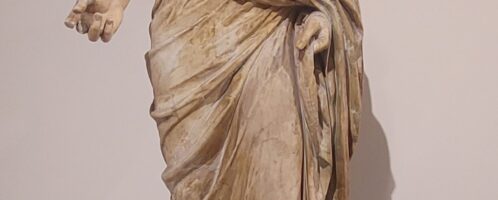
Sculpture of a Roman citizen in a toga. The artifact is located in the National Archaeological Museum of Naples.
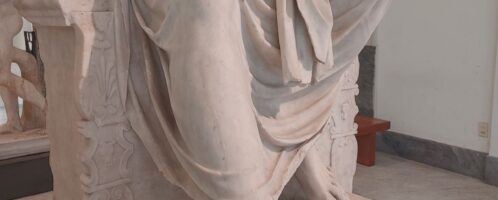
Fragment of a Roman sculpture showing Jupiter seated on a throne. The object dates back to the 3rd century CE and is a copy of a Greek original from the 3rd-1st century BCE. The artifact is located in the National Archaeological Museum of Naples.
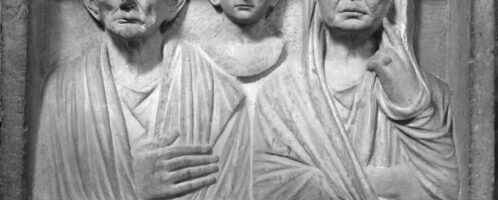
Roman funerary monument with portrait relief of L. Vibius, Vecilia Hila, L. Vibius Felicius Felix and Vibia Prima. The object dates back to 20 BCE – 5 CE.
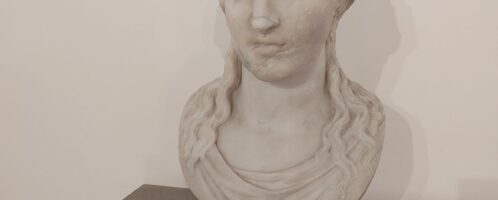
Roman sculpture depicting Minerva (Athena), goddess of wisdom. The object dates back to the 2nd century CE. The artifact is located in the National Archaeological Museum of Naples.
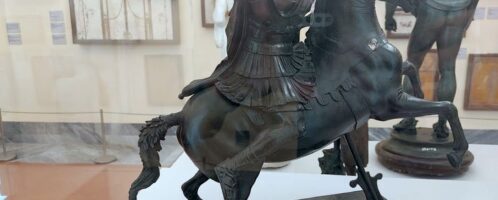
Roman bronze sculpture showing Alexander the Great on horseback. The artifact is located in the National Archaeological Museum of Naples.
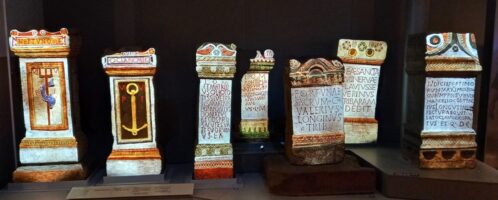
Roman votive altars that have been reconstructed with light and show objects in color. The altar was built in honor of Jupiter, Fortune, Minerva, Neptune and Oceanus, in exchange for their intercession. The artifacts are in the Great North Museum: Hancock in Newcastle upon Tyne (northern England).
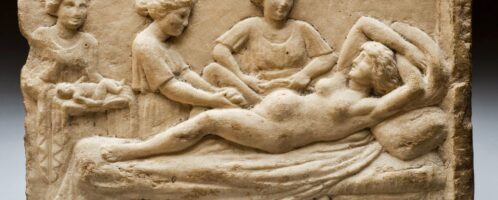
Roman bas-relief depicting a scene of a successful childbirth. Midwives take care of a woman after giving birth, and a smiling assistant holds a newborn baby. The object was discovered in Ostia; dating back to the 1st-2nd centuries CE. The artifact is in the Science Museum in London.
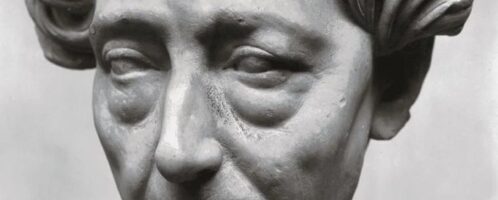
Roman marble sculpture showing a portrait of an elderly woman. Dated to the end of the 1st century CE. The object is located in the Vatican Museums.
Reconstruction of a street bar (thermopolium) in Pompeii. Thermopolium was an ancient street bar that literally means: “a place where (something) warm is sold.” This type of place was popular in Greek or Roman cities among the poor who could not afford their own kitchen. Nowadays, we could describe such a place as “fast food”.