If you have found a spelling error, please, notify us by selecting that text and pressing Ctrl+Enter.

Curiosities of ancient Rome

The world of the ancient Romans was rich in extraordinary, and sometimes even surprising, facts. We draw our knowledge of Roman daily life, customs, and mentality primarily from works left by ancient writers and historians. It is thanks to them that we discover information that is astonishing today – sometimes even hard to believe. Below are some interesting facts that reveal a lesser-known and less obvious side of the Roman world.

I encourage you to submit your own suggestions and to report any corrections or inaccuracies.

Spoliarium – place where corpses of gladiators were kept

In front of the entrance to the arena of Roman amphitheatres, there was a special space – the so-called spolarium. In this place, the corpses of fallen gladiators were kept, which were deprived of weapons and armament. The weapons and equipment of the fallen were given to the slave owner or to the local armory (armamentarium).

Spoliarium - Juan Luna

Dictator and magister equitum – a unique case

In Roman Republic there could be only one dictator. But for a short time in the most turbulent period in the history of Rome a single exception took place. Commander of the cavalry appointed by Quintus Fabius Maximus gained power equal to that of the dictator.

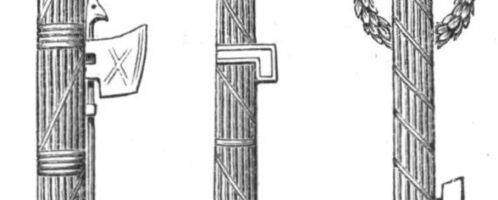
Roman fasces

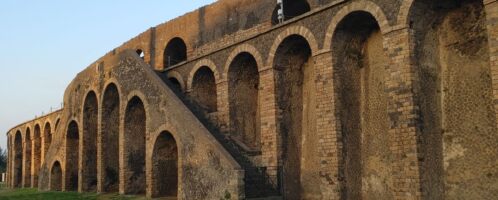
Roman amphitheater in Pompeii

Roman amphitheater in Pompeii was built in 70 BCE and is the oldest object of this type that has survived to our times. Characteristic, externally located stairs led to the upper stands. The amphitheater was originally wooden; later, however, a stone structure was built. The object measures 135 by 104 meters.

Roman amphitheater in Pompeii

Empress Livia’s white hens

Ad Gallinas Albas: Few people know this name today, but two thousand years ago things were different. Known under it was a town nowadays called Prima Porta – near Rome, on Via Flaminia.

Ad Gallinas Albas

Permanent Roman-era bridge

Tiberius Bridge in Rimini is one of the oldest existing bridges in the world. This ancient Roman-era bridge dates back to the Roman Emperors Octavian Augustus and Tiberius. Construction of the bridge began during the reign of Emperor Octavian Augustus in 14 CE and was completed under Tiberius around 21 CE.

Tiberius Bridge in Rimini

Polybius square

Polybius square is (known also as Polybius checkerboard) a type of monoalphabetic cipher (the hidden letter corresponds to the open letter), which owes its name to the famous ancient historian and writer – Polybius. As Polybius himself tells us in his “Histories”, the author of the cipher are the Greeks – Cleoksenos and Democletus – but it was he who undertook to improve the mechanism.

Polybius square with Greek letters

Partially preserved marble head of woman

Partially preserved marble head of a woman from Roman times – probably Venus (Aphrodite). According to the researchers, the oxidation of the sculpture’s brown eyelashes created tear-like spots. The object was discovered in Athens. It is now on display at the Acropolis museum.

Partially preserved marble head of woman

Antique boxing glove

Fragment of a sculpture of a boxer (pugil), which shows an antique boxing glove. This type of wrist protector was made of several layers of leather. Object dated to the 1st century CE; discovered on the site of the former Roman theater in Verona (Italy).

Antique boxing glove

Spelling error report

The following text will be sent to our editors: