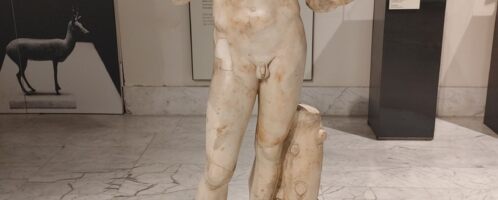
Baby Hercules strangles snake
Baby Hercules strangles the snake sent to kill him in his cradle. According to the myth, the animal was sent by Hera (Juno), who was jealous of Zeus (Jupiter). Hercules was the son of Zeus and Alcmene.
If you have found a spelling error, please, notify us by selecting that text and pressing Ctrl+Enter.
The world of the ancient Romans was rich in extraordinary, and sometimes even surprising, facts. We draw our knowledge of Roman daily life, customs, and mentality primarily from works left by ancient writers and historians. It is thanks to them that we discover information that is astonishing today – sometimes even hard to believe. Below are some interesting facts that reveal a lesser-known and less obvious side of the Roman world.
I encourage you to submit your own suggestions and to report any corrections or inaccuracies.
Baby Hercules strangles the snake sent to kill him in his cradle. According to the myth, the animal was sent by Hera (Juno), who was jealous of Zeus (Jupiter). Hercules was the son of Zeus and Alcmene.
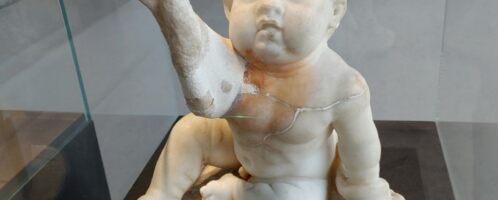
Roman marble bust of a child. Object dated to 37-41 CE. The artifact is in the National Archaeological Museum in Naples.
Road sign showing the way to the brothel in Pompeii. Object dated to the 1st century CE.

Roman statue showing a young judge. Object dated to the end of the 4th and the beginning of the 5th century CE. The object is located in Centrale Montemartini in Rome.
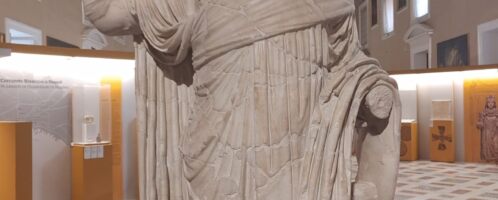
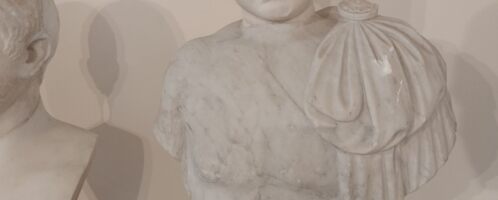
Roman statue showing, perhaps, Marcus Junius Brutus. Object dated to .30 of the 1st century BCE. The artifact is in the National Archaeological Museum in Naples.

It may come as a surprise, but the profession of a hair puller really existed and was very often performed in Rome. The extractor performed its work both under the armpits and in intimate places for women and men

Vestal virgins (Virgines Vestales) were virgins who guarded the sacred fire goddess Vesta (goddess of the hearth and state) in the temple at Forum Romanum. The superior of the Vestals was Virgo Vestalis Maxima, the oldest Vestal, and their religious guardianship was exercised by Pontifex Maximus. He also selected the girls for the ministry.

Lugii/Longiones were a people of not entirely clear origin, just before BCE and in the first centuries CE they inhabited the upper basin of the Oder and Vistula rivers, i.e. the area of today’s southern and central Poland.

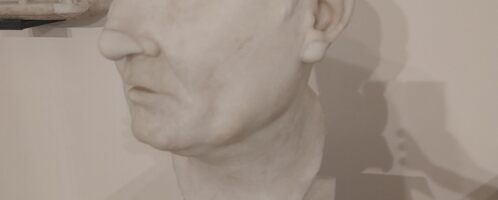
Roman bust showing a man. Object dated to the reign of Octavian Augustus (27 BCE – 14 CE); it is a copy of an original from the middle of the 2nd century BCE. The artifact is in the National Archaeological Museum in Naples.