
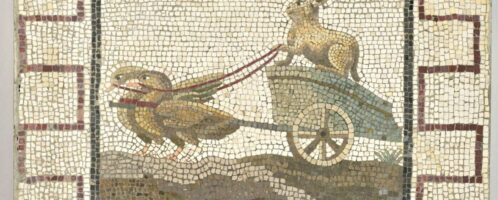
Roman mosaic depicting rabbit driving chariot pulled by geese
Roman mosaic depicting rabbit driving chariot pulled by geese. The object is located in the Louvre Museum.
If you have found a spelling error, please, notify us by selecting that text and pressing Ctrl+Enter.
The world of the ancient Romans was rich in extraordinary, and sometimes even surprising, facts. We draw our knowledge of Roman daily life, customs, and mentality primarily from works left by ancient writers and historians. It is thanks to them that we discover information that is astonishing today – sometimes even hard to believe. Below are some interesting facts that reveal a lesser-known and less obvious side of the Roman world.
I encourage you to submit your own suggestions and to report any corrections or inaccuracies.
Roman mosaic depicting rabbit driving chariot pulled by geese. The object is located in the Louvre Museum.
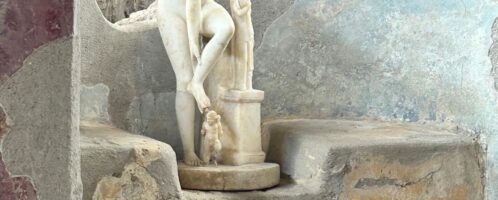
Statue of a nude Venus in the peristyle of the Torre Annunziata in Oplontis. The object was likely a decorative element in one of the rooms in the house.
Fragment of a Roman fresco discovered in Pompeii, depicting an initiation ritual into the mysteries of Dionysus. The scene depicts shellfish and slaughtered animals.

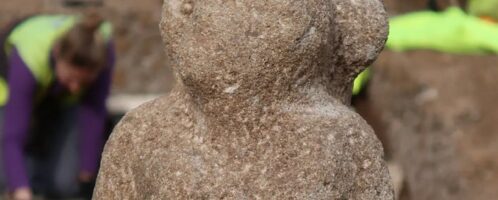
Roman sculpture honoring Jupiter. The object was discovered in 2024 in Stuttgart, southwest Germany, on the site of a former Roman fort.
Preserved Punic amphora that was excavated from the bottom of the Mediterranean Sea near the island of Gozo. The object is dated to the 4th-3rd century BCE.

Roman floor mosaic depicting birds. The object is located in the so-called House of the Faun (VI. 12. 2) in Pompeii.

The mosaic of Pan and the Hamadryad, found in Pompeii, is a fascinating example of Roman art. Such works were popular among Roman householders, who were eager to decorate their villas with mythological scenes, often imbued with erotic or metaphorical symbolism.

Inscription on the wall of the House of Lovers in Pompeii: “Amantes, ut apes, vitam melitam exigunt”, meaning “Lovers, like bees, lead a life sweet as honey”.

Glass vessel with intact stopper and contents; probably olive oil from Pompeii. The object is in The British Museum.

Aulus Cornelius Celsus was a Roman scholar and encyclopedist of the 1st century CE, best known as the author of De Medicina, one of the most important sources of medical knowledge in antiquity. In his work, he described various methods of treating general illnesses, including recommending bloodletting (sanguis mittendus) as a preventive measure in the event of the body becoming overloaded with excess “fluids”.
