Reconstruction of image of Pompey the Great
Reconstruction of the image of the Roman general and politician – Pompey the Great (106-48 BCE).
If you have found a spelling error, please, notify us by selecting that text and pressing Ctrl+Enter.
Reenactments are curiosities that showcase attempts to recreate the appearance, clothing, weaponry, and daily life of ancient Romans. This category contains interesting information and lesser-known facts about historical reconstructions, experimental research, and the activities of reenactment groups, which provide a deeper understanding of the realities of the Roman Empire.
Reconstruction of the image of the Roman general and politician – Pompey the Great (106-48 BCE).

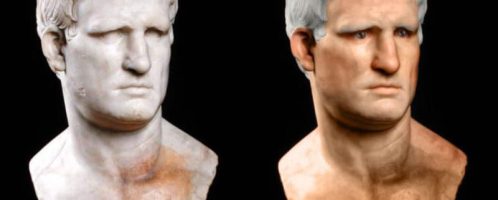
Recreated Roman bust of a man

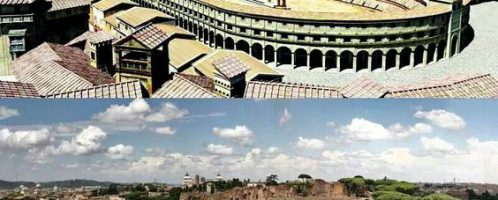
Circus Maximus was a stadium for chariot races, located in the valley between the mountains of Aventine and Palatine. It was the first and largest stadium in ancient Rome. Its length was 621 and width 118 m. The facility could accommodate up to 150,000 spectators.
In Mas des Tourelles, in the south of France, a group of archaeologists has spent 20,000 dollars to restore the 1800-year-old largest winery in Gaul. It was opened in the early 90s of the twentieth century. Today a bottle of wine is sold there for around $12.

Painted bust of Marcus Agrippa – a friend and general of Augustus.
In Sydney, Australia, the great LEGO fan, Ryan McNaught made a model of Pompey from LEGO. He needed over 500 hours and over 190, 000 blocks to create his project. This is one of the largest historical model made of LEGO. The mock-up shows an ancient Roman city from the year 79 BCE, from the moment before the Vesuvius eruption.

An attempt to reconstruct the image of Publius Quinctilius Varus, who commanded three Roman legions (XVII, XVIII and XIX) destroyed in the Teutoburg Forest by the Germans under the command of Arminius. As a result of the defeat, legionary eagles were lost, what was a disgrace to the Romans’ honor.

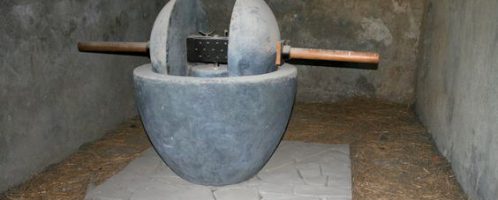
Reconstruction of a Roman mill used for the production of olive oil – known as trapetum. The machine consisted of a large bowl (mortarium), into which olives were falling, which then were crumpled by two half-round stones (orbes).
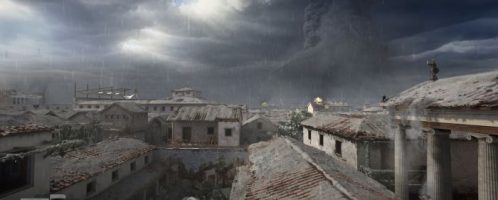
Using computer technology, the moment of the Vesuvius eruption in 79 CE was recreated – a tragic event during the reign of the Emperor Titus.