If you have found a spelling error, please, notify us by selecting that text and pressing Ctrl+Enter.

Curiosities of ancient Rome (Society)

Society is a collection of curiosities dedicated to the daily life, customs, and social structure of ancient Rome. This category includes lesser-known facts and interesting information about interpersonal relationships, family, social status, work, and the functioning of various social strata of the Roman Empire.

Home amenities in ancient Rome

Roman mosaics, frescoes and written documents tell a lot about how the Romans lived daily. The wealthy lived comfortably in magnificent homes, ate exquisite food, wore beautiful clothes, and had slaves to serve them. Life was hard for the poor. They had to work and had little time for rest. Some Roman monuments are related to their everyday life.

Roman feast

Voting in ancient Rome

From the beginning of Roman statehood, various types of population gatherings played a huge role. They had different names – tribe committees, centurial committees, and curial committees. Their shape and competencies have evolved, so I do not want to go into excessive detail here and will continue to refer to them generally as folk assemblies.

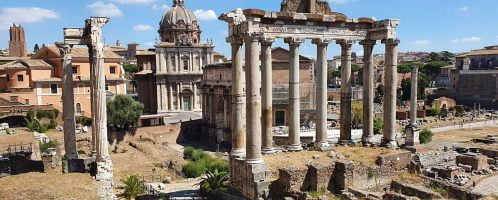
Forum Romanum

Law and society of ancient Rome

Many legal systems in the world today, such as the French legal system, are based on Roman law. Law and order were essential to the governance of the Roman Empire; there were many laws and many ways to interpret them. They were all unified by Emperor Hadrian in the 2nd century CE. A significant reform of the law was carried out by Emperor Justinian (reigned 527-565). His law is known as the Justinian Code. It became the basis of Western European law.

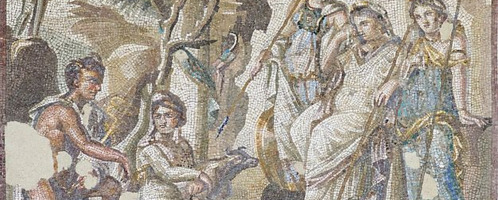
Judgment of Paris on Roman mosaic

What was it like to live in ancient Rome? Cities and roads – heritage of antiquity

Roman cities were carefully planned, built on a grid of streets intersecting at right angles. The Romans borrowed this idea from the Greeks. Streets divided the city into quarters, just like in some modern cities, such as New York. A wall was built around the city to mark its border. Roman cities were bustling, populous and full of large, magnificent buildings. In the 1st century BCE Rome had over a million inhabitants.

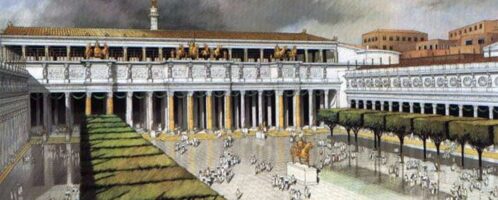
Reconstruction of Trajan's Forum

Slaves in Rome

The prevailing view is that slavery is one of the darkest sides of Roman civilization. From our perspective, this is a reasonable opinion, but on the other hand, it must be remembered that slavery was a common phenomenon at that time, so when condemning it, one should probably also take into account the different state of social development, different mentality of people, etc.

Fresco from the so-called House of Agrippa on the Tiber in Rome

Beards in ancient Rome

In ancient Greece, the main type of beard was a lush full beard. In Sparta, this is a complicated issue. Spartans are generally said to have had beards without mustaches. However, every depiction in art does not support this except in figurines where the beard is carved and the mustache is not.

Legion musicians - cornicines, cast from Trajan's Column, Victoria and Albert Museum, London, England

Dowry hunters in Roman Empire

Surely some of us have heard of a situation where someone married someone to take over his property. It turns out that such a wicked way of getting rich was practiced long ago, in ancient Rome. Men who commit such acts are now known as bounty hunters. Interestingly, this was quite common in the early centuries of our era.

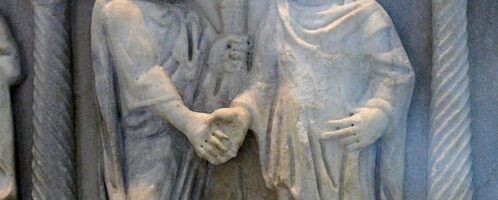
Fragment of the Dioscuri Sarcophagus, 2nd half of the 19th century 4th century CE, Musée départemental Arles antique, France

Shops of ancient Romans

What is a store and what is done in it probably everyone knows. It may come as a surprise to some that shops already existed in ancient Rome.

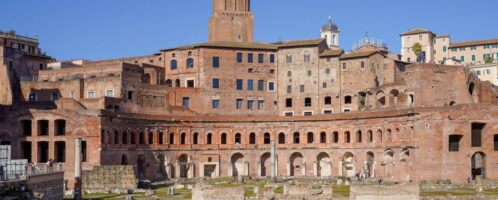
Trajan's halls in Rome

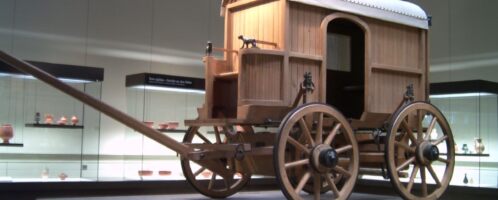
Travel cart

It may come as a surprise to many that the Romans ran cart rentals, but it’s true!1

Reconstruction of a Roman carriage, Romano-Germanic Museum, Cologne

Spelling error report

The following text will be sent to our editors: