If you have found a spelling error, please, notify us by selecting that text and pressing Ctrl+Enter.
Curiosities of ancient Rome (Unknown facts)
Unknown Facts are curiosities revealing little-known, surprising, or rarely discussed information from the world of ancient Rome and antiquity. This category includes unusual details, curiosities, and facts that offer a less obvious perspective on the Roman Empire.
Many diseases among poor
More than 90% of the population of Roman Empire came from the rural poor and it was barely making ends meet. The Roman historian Titus Livius mentions a centurion who in the 2nd century BCE. After inheriting a provincial house and one iugerum (about two-thirds of an acre) of land, he had to feed his wife and eight children.

Fashion and jewelry in Rome developed strongly
In ancient Rome, fashion developed more than in Greece. The same was true of jewellery. Precious stones were very popular with the ladies; the most popular were emeralds. A big surprise for modern women may be the fact that diamonds appeared in these areas for the first time. In addition, stones such as agate, garnet, yarrow, and aquamarine were used to make jewellery.

Vibia Perpetua – Christian martyr
Vibia Perpetua lived at the turn of the 2nd and 3rd centuries CE. She came from a wealthy Roman home, and her parents professed various faiths: her father was a pagan, and her mother was a Christian. Vibia went down in history as a Christian martyr from Carthage.

Todigubnus – example of local elite ready to cooperate with Romans
Before, during and after the conquest/subjugation of new territories, the Roman state always tried to find local elites who were ready to cooperate with the Romans.

Widespread migrations within Roman Empire
Roman Empire was a country extremely open to internal migration; additionally, it relocated troops (especially auxiliary troops) to areas far from their homeland. This is evidenced by the preserved, inter alia, tombstones of soldiers and people associated with the military stationed near Hadrian’s Wall.

Silk was popular in Rome
During the reign of Octavian Augustus (27 BCE – 14 CE), silk was an extremely popular material. Gaius Petronius refers to him as ventus textilis (“woven wind”). However, this product was extremely expensive and it was difficult to get it because it was produced in distant China, a country that guarded its monopoly.
Incest, adultery or fornication
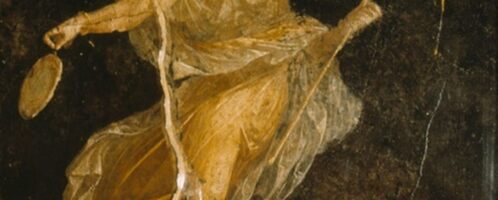
Under Roman law, sexual intercourse qualified as incest, adultery or fornication (stuprum). This word is often used by Roman writers also in the context of the violation of Roman rights of freedom in relation to free-born women of both sexes.

Assessment of Roman republican system by Polybius
Polybius went down in history as a Greek historian who, after his stay in Roman captivity, came under the protection of the consul Lucius Emilius Paulus, and then took part in more important military operations of the Romans in the middle of the 2nd century BCE, including the defeat of Carthage and the destruction of the city. Polybius in his “Histories” describes the history of Rome in the years 264-146 BCE, showing the Roman system as an example of the Greek ideal of a “mixed constitution”.