If you have found a spelling error, please, notify us by selecting that text and pressing Ctrl+Enter.

Curiosities of ancient Rome (Unknown facts)

Unknown Facts are curiosities revealing little-known, surprising, or rarely discussed information from the world of ancient Rome and antiquity. This category includes unusual details, curiosities, and facts that offer a less obvious perspective on the Roman Empire.

Navigable canal for Nicomedia

Pliny the Younger began his clerk career under Emperor Domitian, but withdrew from public life, discouraged by the universal terror. He returned to politics under Emperor Trajan, who trusted him and entrusted him with the governorship of the province of Bithynia and Pontus in 109 CE. At that time, he proposed to the ruler an extremely ambitious and interesting project – the construction of a navigable canal for Nicomedia, which would bypass the Bosphorus. It was also planned to build a series of aqueducts.
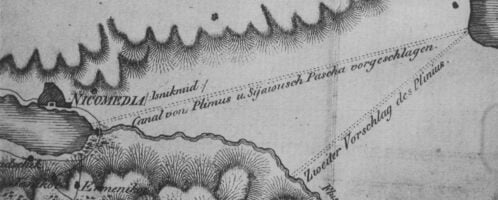
Navigable canal in Nicomedia

People of Cantabri

Strabo, a Greek geographer and historian from the 1st century BCE in his work Geography mentions the people of Cantabria with whom Rome was at war in the years 29-19 BCE They were finally defeated only in 19 BCE by the troops of Marcus Agrippa. The war was the last phase of the Roman conquest of Spain.

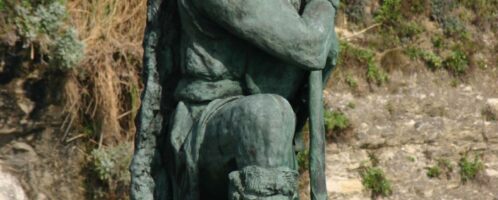
Monument showing a Cantabrian in Santander (Spain)

Roman and Latin colonies

In addition to the Roman colonies being strategic hubs, whose inhabitants were full Roman citizens, so-called Latin colonies whose inhabitants did not have full political rights. The Latin colonies had autonomy and were obliged to provide Rome with a military contingent during the war.

Roman Latium

Prominent claimants to throne after death of Commodus

Murder of Commodus at the end of 192 CE it ended the reign of the Antonine dynasty and certainly the best period of the existence of the Roman empire. He was succeeded by Pertynax, a respected senator and efficient leader of Marcus Aurelius, chosen by the conspirators. Unfortunately, however, the financial and internal discipline that Pertinax tried to impose in Rome led to his murder by the praetorians in March 193 CE.

Year of the Five Emperors

Roman shoemakers

Certainly, the Roman shoemakers (sutor) were very good artisans and their products were widely worn throughout the Mediterranean. Most often, the inhabitants of the Tiber wore the most ordinary sandals (sandalia or soleae). Shoes (calcei – from the word calx meaning “heel”) were also popular, apparently, they looked best with a toga and thus were worn by the upper classes.

Reconstruction of caligae

Demand for services of prostitutes

Demand for prostitutes was on the agenda and relatively high. The earnings of prostitutes were subject to taxation by the state, which also, thanks to appropriate legislation, secured the money invested in the lupanaras of that time.

Roman prostitution

Skull of defeated gladiator

Preserved gladiator skull with visible traces of a trident hit. This weapon was used by the retiarus – a lightly armoured warrior who also had a net that he threw at his opponent to restrain him. Most often, his rival was murmillo – a heavily armoured infantryman who had a helmet and a large shield.

Skull of defeated gladiator

Where did “Abracadabra” come from?

The word “abracadabra ” first appears in Liber Medicinalis (known as De Medicina Praecepta Saluberrima), a medical book written in verse in Latin. It is believed that the author could have been Quintus Serenus Sammonicus, a court scholar of Emperor Septimius Severus (ruled 193-211 CE) and Caracalla (209-217 CE). In chapter 51 the author recommends that people suffering from malaria wear an amulet containing the said word in the form of a triangle:

Where did "Abracadabra" come from?

Spelling error report

The following text will be sent to our editors: