If you have found a spelling error, please, notify us by selecting that text and pressing Ctrl+Enter.

Curiosities of ancient Rome (Unknown facts)

Interesting facts from the world of ancient Romans. The world of ancient Romans was full of amazing accounts and information.

Exotic animals in Rome

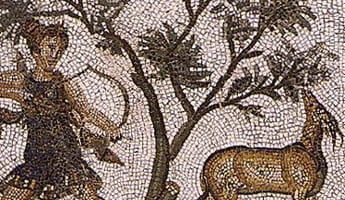
Animals were delivered from distant parts of the Roman Empire to show the crowd the size of the conquest and show the wonders brought from distant lands. Those were sent by provincial administrators, and even by kings or noblemen of still unconquested lands, eg. from India. Menagerie – vivarium was located near the Porta Prenestina.
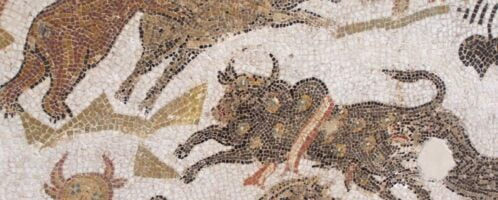
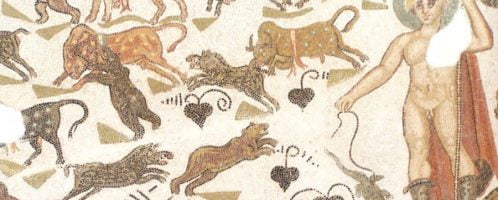
Exotic animals on Roman mosaic

Organization at games

The organization of gladiatorial fights has become a great task in which intermediaries and entrepreneurs of all specialties were involved.

Animals on a Roman mosaic

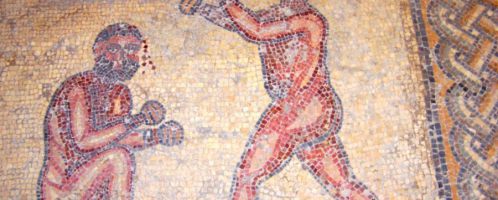
Fighting to death

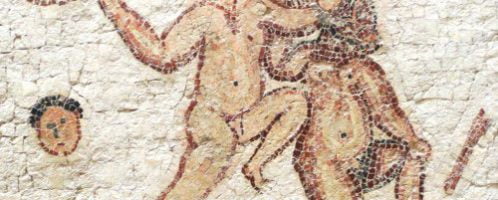
Fighting to death – munera – come from a sacrifice in honor of the dead and have an Etruscan pedigree. At first gladiatorial fights were arranged by the family on the grave of deceased ancestors. The first games enriched with gladiators at the expense of the state were to take place in 105 BCE.

Men's fight on the mosaic

Number of games

Augustus demanded officials of organizing the performances. These was so expensive that they led the officials to ruin and often required financial support from Augustus himself. It was a way to prevent the officials from getting too rich, which was a pain in the time of the republic.

Cutting off the head on a mosaic

“Bread and circuses”

“Panem et circenses”“bread and circuses” – according to popular messages, these demanded Roman people. Those being in power were well aware of the mood of the people. The Games were a political tool and served not only as a demonstration of strength. Above all, they were meant to occupy crowds of unemployed Romans, and to provide entertainment to those who work.

"Bread and circuses"

Volumnia

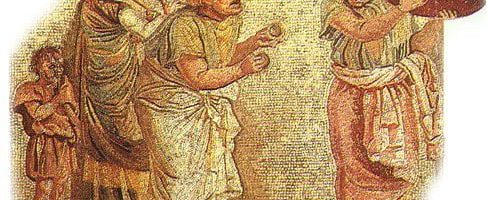
For a long time, women were not allowed to appear in theatrical performances, and women played men’s roles. The only exception was a group of mimes, among whom you could meet women. One of the most famous mimics was a Volumnia, a freedman of Publius Volumnius Eutrapelus, who took the name Cytheris in honor of Aphrodite from Cytheris.

Volumnia

Imitation of animal voices

As Petronius claims, one of favorite plays of Romans was imitating animal voices, and people of certain professions, giving away their movements, gesticulations or way of speech. It seems that the barbers or hairdressers were very well-suited due to their verbosity.

Roman mosaic depicting the hunt

Spelling error report

The following text will be sent to our editors: