If you have found a spelling error, please, notify us by selecting that text and pressing Ctrl+Enter.

Curiosities of ancient Rome (Unknown facts)

Unknown Facts are curiosities revealing little-known, surprising, or rarely discussed information from the world of ancient Rome and antiquity. This category includes unusual details, curiosities, and facts that offer a less obvious perspective on the Roman Empire.

Manumission in ancient Rome

The formal procedure for liberation of the slave (manumissio vindicta) took place in front of the praetor or consul and only with his consent (addictio). At least three people had to take part in the process: a slave, an owner and an outsider (adsertor libertatis) who was free and certified the freedom of a slave.


Slave Sale in Rome, Jean-L├ęon G├ęr├┤me

Gladiatrix

The main difference between a male and a female gladiator was the fact that a woman fighting in the arena was not a slave. Probably in the later Roman period, gladiatrices (singular gladiatrix) were also people from slavery. Originally, however, women voluntarily took part in gladiatorial battles, seeking adventures.

Gladiatrix

New movie about Ben Hur

The creators of the new movie about Ben Hur had plans to make the film in the Circus Maximus itself, the place where the great chariot races were once held. However, as it turned out, the producers were quickly brought back to Earth and due to “technical problems” they could not be able to shoot the famous scene of the race Ben Hur and Messala.

A new movie about Ben Hura

Vandalism on Roman monuments

In 2015 happened another example of vandalism on the majestic monument of Rome. Two young (21 and 25 years old) American women carved with a coin letters on the ancient wall. Then they made a “selfie” on her background. Other visitors noticed this, and the protection called for the carabinieri. This is another act of vandalism on Roman monuments.

Vandalism on Roman monuments

Dominant languages of Rome were Latin and Greek

The dominant languages of the Roman Empire were Latin and Greek. Latin appeared as a “language of rulers” and was widespread in the Empire, especially in the western provinces in the army and the courts. The Greek, in turn, was the determinant of good education and birth. This language dominated the east and was very useful in diplomatic missions.

Latin and Greek

Longest word of classical Latin

A longest word in classical Latin is the word subductisupercilicarptor [24 characters], meaning “a person who criticizes and raises his eyebrows upwards” – literally, this term was for an extremely critical critic. Aulus Gellius (2nd century CE) also mentions another long word in his “Attic Nights”: trisaeclisenex, which literally means “an old man living for three generations”.

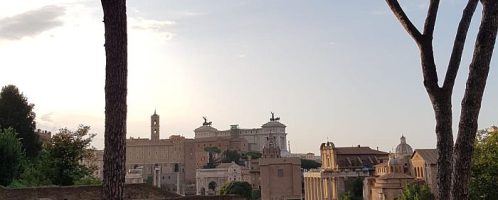
Roman ruins

Spelling error report

The following text will be sent to our editors: