In southern Turkey, tomb of gladiators was probably discovered
In Anavarza in southern Turkey, it is likely that a gladiatorial tomb from Roman times was found. If that were true, it was one of the few discovered tombs of this type from antiquity.
If you have found a spelling error, please, notify us by selecting that text and pressing Ctrl+Enter.
In Anavarza in southern Turkey, it is likely that a gladiatorial tomb from Roman times was found. If that were true, it was one of the few discovered tombs of this type from antiquity.

Archaeologists discovered the remains of a Roman presence in Whitchurch, in the west of England, in 2016.
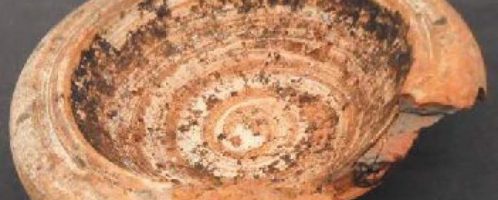
The bowl in which the birds bathed turned out to be a 2000-year-old Roman vessel – a mortarium. Such information comes to us from Alcester, England.
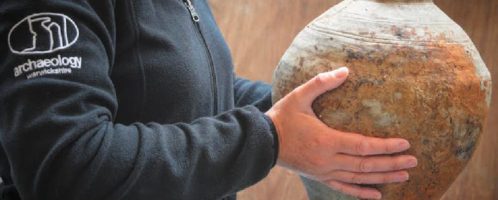
Scientists have carried out studies of Roman amphoras, discovered a few years ago on the coast of Latium, in order to understand the composition of ancient wine. As it turns out, local grapes were used for the production of wine, and resin and various spices from different parts of Europe were used to diversify the taste. Sicily or the south of Italy. Moreover, both cultivated and wild grapes were used to produce wine.

In 2016, scientists found evidence stating where the ancient Romans breached the third wall line that once encircled Jerusalem. This site was at the end of the Second Temple, where Migrash HaRussim is now located, residential development in the city centre.
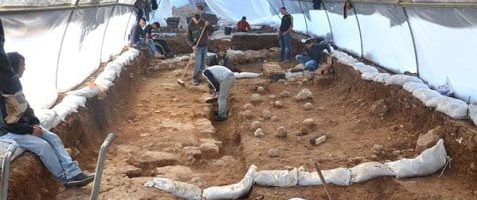
Remains of a 2,200-year-old Roman fountain have been discovered in northwestern Turkey. The discovery took place in the ancient city of Assos. According to researchers, it was a monumental building that was supplied by cisterns in the city.

In 2016, a 1,600-year-old glass workshop was discovered in Israel, which proves that Judea was once an important glass manufacturing centre for the Roman Empire.
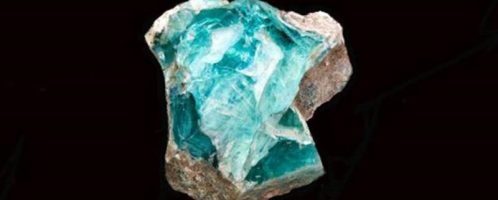
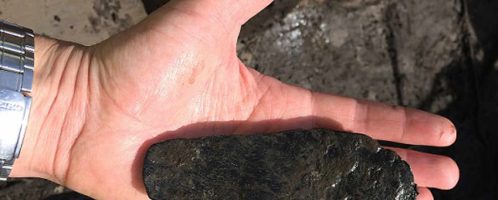
Archaeologists announced that they most likely found the remains of a Roman glass factory in Bristol (south-west England). According to researchers, the center was established between the 2nd and 4th centuries CE. A small amount of industrial waste has survived to our times, including a fragment of a crucible and glass waste.