Switzerland returns Etruscan artifacts
In 2016, the Swiss government returned 45 chests containing unique Etruscan artefacts, including two clay sarcophagi, to Italy.
If you have found a spelling error, please, notify us by selecting that text and pressing Ctrl+Enter.
In 2016, the Swiss government returned 45 chests containing unique Etruscan artefacts, including two clay sarcophagi, to Italy.
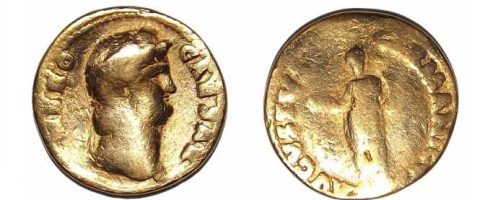
A very rare gold coin from the Roman Empire was found in northern England in 2015. The coin (aureus) has an embossed image of Nero, and it is dated to the period 64-65 CE. The place where the coin was found was once a Roman fort near Hadrian’s Wall.
In the small village of Kelshall, located between London and Cambridge, in 2015, a man, while exploring the earth with a metal detector, found a unique specimen: a very well-preserved tomb from Roman times, in which unique artefacts were found – including bronze jugs, coins, mosaic pieces and studs from a pair of shoes.

Near Tel Megiddo, in northern Israel, was discovered in 2015, dating to the 2nd-3rd century CE. Permanent Roman camp of the VI Ferrata legion called Legio. The legion was one of two stationed in the region and participated in the suppression of the Bar Kochba rebellion in 132-135 CE.
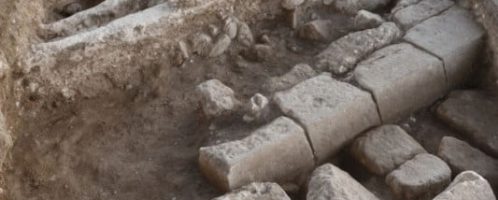
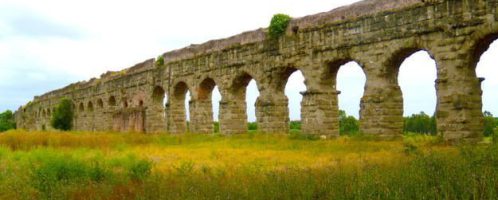
The aqueducts supplying water to the Eternal City are one of the most famous achievements of the builders of ancient Rome. Scientists from the University of Illinois at Urbana-Champaign have just solved the mystery of one of them. Based on studies of limestone sediments, they determined how much water was supplied to Rome by the Anio Novus aqueduct. They write about it in the latest issue of the Journal of Archaeological Science.
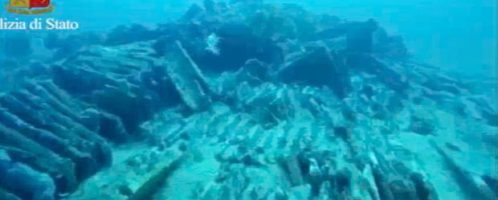
In 2015, divers discovered a more than 2,000-year-old Roman shipwreck off the coast of Sardinia that carried terracotta tiles produced around Rome. The product was probably to be used in the construction of the villa of a Roman aristocrat or wealthy merchant. According to scientists, the goods were to be transported either to Spain or to the western part of Sardinia.
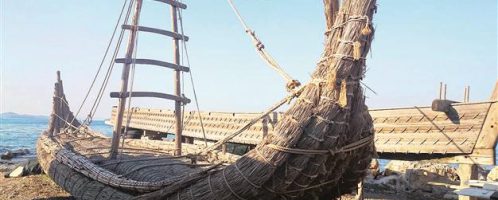
The University of Ankara will rebuild the 2000-year-old Roman port in Urla, one of the oldest buildings in the Aegean region. The port will have boats, catapults, a warehouse and the same instruments as in Roman times. When the project is completed, tourists visiting the place will be able, for example, to sail Roman boats on the sea. The project is being developed with the support of the Turkish Ministry of Culture and Tourism.
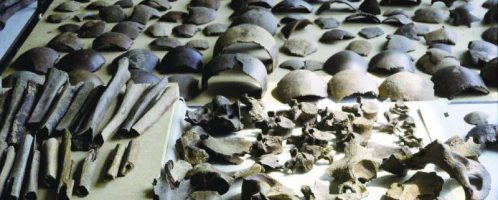
During a conference held on December 11, 2015 in Amsterdam, archaeologist Nico Roymans of the Free University of Amsterdam announced that his team had managed to confirm the location of the place where the Roman commander Julius Caesar massacred two Germanic tribes in 55 BCE.
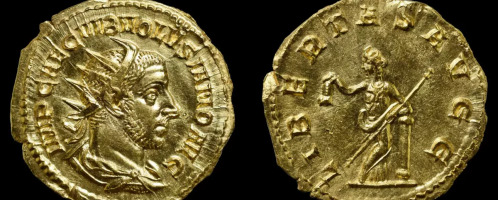
In southwestern Hungary, in Kaposvár, a rare gold Roman coin (aureus) was discovered showing Emperor Volusianus who co-ruled with his father Trebonianus Gallus for only two years; then they were killed by their own soldiers. The object is dated 251-253 CE.
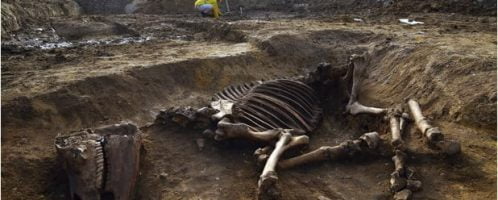
In 2015, in Cambridge, southern England, archaeologists discovered the remains of a horse, more than 2,000 years old. The animal’s almost intact skeleton reveals that it was suffering from a broken leg that was already beginning to heal. Scientists speculate that the animal may have been used to work in quarries that provided building material for a nearby settlement.