On trail of Julius Caesar’s lies
Excavation work in 2015 revealed that Julius Caesar was a consummate propagandist of his own cause.
If you have found a spelling error, please, notify us by selecting that text and pressing Ctrl+Enter.
Excavation work in 2015 revealed that Julius Caesar was a consummate propagandist of his own cause.

In 2015 in Rome, during the construction of the third metro line, the largest body of water in ancient Rome was discovered, which was located on a farm located closest to the centre of the Eternal City.
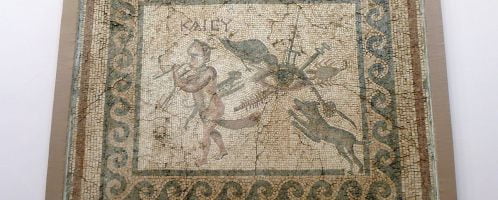
Ancient Roman mosaics had, among others, protect against bad luck, evil charm and human envy. The results of the research of a team of over a dozen prof. María Luz Neiry Jiménez from the University of Charles III of Spain in Madrid was recently compiled in a book entitled “Religiosidad, rituales y prácticas mágicas en los mosaicos romanos”.
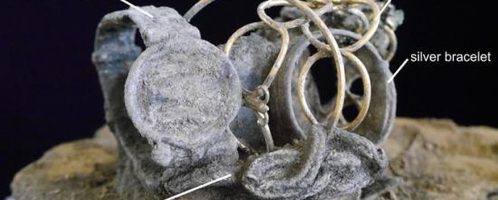
During the excavations in 2014, in Colchester, under a department store, a wooden box and bags were discovered. They contained: three gold armlets, a silver chain, two silver bracelets, a silver armlet, a small bag of coins, a small box containing two sets of gold earrings, and four gold rings. The finds date back to around 61 CE.
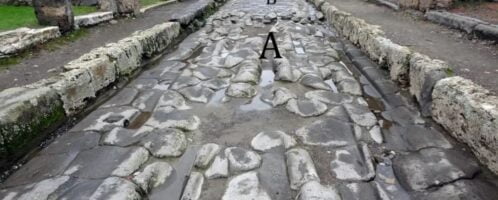
Ruts and potholes are not only the bane of modern drivers. Discovered in 2015, the Roman road in Ipplepen, Britain, reveals that the Romans also had a problem with it.
After 28 years, it will be possible to admire the imposing Arch of Janus in Rome from a closer stand. The monument is located in the Forum Boarium and since the bomb exploded near the Church of St. George on Velabrum in 1993 was separated from the inhabitants and tourists by a high fence.

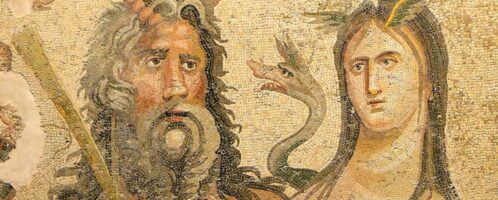
In 2015, magnificent antique mosaics from two millennia ago were unveiled by Turkish researchers in the south of the country.
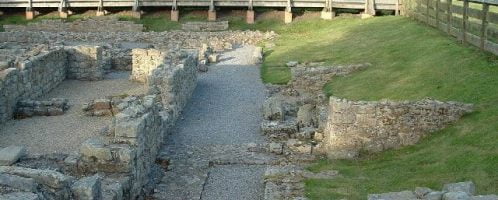
In 2015, in Binchester, County Durham, UK, further discoveries were made at an extraordinary Roman fort. The silver ring found in it may be evidence of early signs of Christianity in Roman Britain. Archaeologists also discovered a 2-meter-high bathhouse.
An international team of archaeologists returned to the site of the sinking of the famous wreckage after more than 100 years, where an ancient computer was found – the Antikythera mechanism. It turned out that the wreck hides more unusual secrets.