Fish at Octavian’s feet
Pliny the Elder tells us in his work “Natural History” an interesting story that was to herald Octavian’s victory in the war against Sextus Pompey, son of the great leader Pompey the Great.
If you have found a spelling error, please, notify us by selecting that text and pressing Ctrl+Enter.
Ancient stories are curiosities revealing lesser-known, surprising, or unusual episodes from the world of ancient Rome and antiquity. This category includes short stories about events, people, and situations that don’t always make it into classical works, yet allow for a better understanding of the realities and mentality of the era.
Pliny the Elder tells us in his work “Natural History” an interesting story that was to herald Octavian’s victory in the war against Sextus Pompey, son of the great leader Pompey the Great.

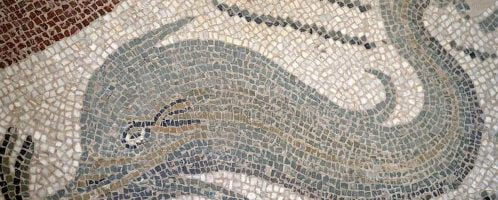
Pliny the Elder in his work “Natural History” tells many amazing stories about the friendship of animals and people. In book IX we can read, among others about the fact that the dolphin is a friendly animal, as evidenced by the cited story of a boy from a poor family in Baiae.
With the announcement of the Edict of Milan in 313 CE, the voice and opinion of Christians on many issues became louder and louder in Rome’s socio-political life. A great example of rivalry between the Romans about the traditional Roman religion and Christians is the dispute over the statue of the winged goddess Victoria in the Senate.

Women are often called “weak sex”. Nothing could be more wrong. More than once, this “weak sex” had more “guts” than many men. Ideally, this can be illustrated by the example of Arria – the wife of the Roman senator Caecina Paetus.

According to the message of Eusebius of Caesarea before the Battle of the Mulvian Bridge (October 28, 312 CE) Constantine the Great he had a vision that allowed him to win.

Marcus Porcius Cato Licinianus was one of the sons of the famous Cato the Elder known as the Censor, who became famous for his ruthless attitude towards Carthage and an extremely strict approach to life. Licinianus was born in 192 BCE and he an example of a young Roman who came from the upper classes of society. As his father was a distinguished soldier for the Republic, a Roman tradition called for his son to follow in his footsteps.

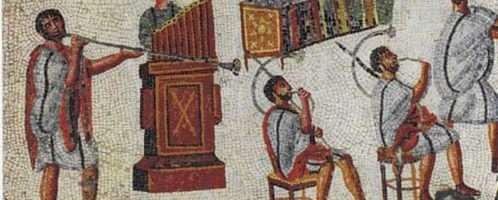
When Ctesibius, a 3rd century BCE Alexandrian mathematician, was constructing his hydraulis, the first water organ in history, certainly no one predicted him great successes. The instrument, intended as a syringa with a mechanical blast, initially functioned only as a technical curiosity. However, it took only two centuries for the music flowing from metal pipes to make a Mediterranean career – organ music is already mentioned with approval by Cicero himself (Tusc. III. 43).