Shrimp on Roman ring
Roman gold ring with a cameo depicting a shrimp. The object dates to the 2nd century CE.
If you have found a spelling error, please, notify us by selecting that text and pressing Ctrl+Enter.
The world of ancient Romans abounded in a number of amazing curiosities and information. The source of knowledge about the life of the Romans are mainly works left to us by ancient writers or discoveries. The Romans left behind a lot of strange information and facts that are sometimes hard to believe.
Roman gold ring with a cameo depicting a shrimp. The object dates to the 2nd century CE.

Roman fresco depicting Victoria, the Roman goddess of victory. Dating back to the 1st century CE, it is currently located at the Getty Museum in Los Angeles, USA.

An 800-square-meter Roman mosaic discovered in Antioch, southern Turkey, retains the rippling marks of an ancient earthquake without disturbing its design. The piece was discovered in 2012.

Roman vessel in shape of bear. Dating back to the 3rd or 4th century CE, it was likely filled with oil or perfume. The artifact is located at The Metropolitan Museum of Art in the United States.

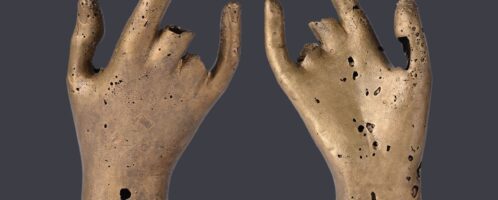
Bronze hand of Jupiter Dolichenus, an enigmatic deity whose cult spread from Syria throughout the Roman Empire. The object is 22.5 cm long and was likely part of a statue of the deity. The artifact was discovered in Ćuprija, Serbia; it is currently housed at the Jagodina Museum in Serbia.
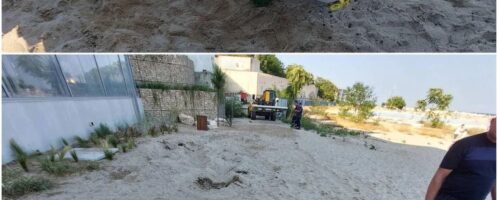
In Varna, Bulgaria, in 2024, a tourist noticed an unusual table at a beach bar. It turned out to be a 1,700-year-old Roman sarcophagus (measuring 90 cm x 235 cm x 75 cm) that was being used as a table.
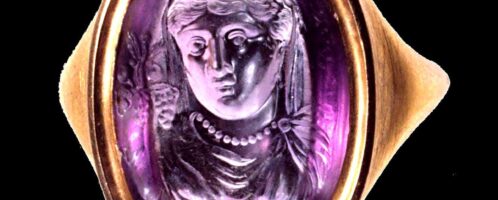
Roman ring embossed with the image of the goddess Fortuna. The object is dated to 1st BCE – 1st century CE.
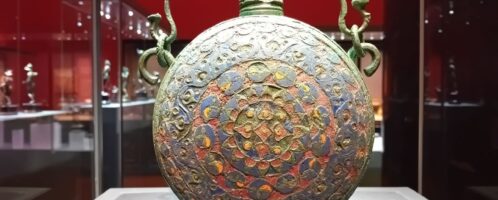
Roman metal vessel with remnants of enameled decoration. The object was found in a grave in Pinguentum (present-day Buzet, Croatia), but was made in Britain or Gaul in the 2nd century CE. The artifact is located at the Kunsthistorisches Museum in Vienna.
An extraordinary ancient artifact has been discovered off the coast of Sicily, near the Aegadian Islands: the bronze prow of a Roman warship, known as a rostrum. This rare find directly links us to the naval battle off the Aegadian Islands (241 BCE), which marked the end of the First Punic War (264-241 BCE). Such relics offer a glimpse into ancient naval warfare and the might of the fleets of the time.