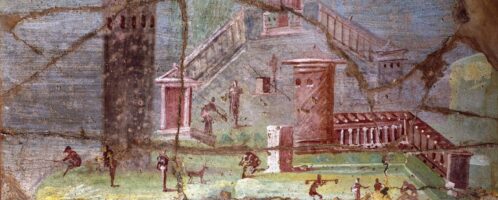
Roman fresco showing maritime villa
Roman fresco depicting a maritime villa. The object dates to 20–45 CE; found in Pompeii.
If you have found a spelling error, please, notify us by selecting that text and pressing Ctrl+Enter.
Artifacts is a collection of curiosities dedicated to objects left behind by the ancient Romans. This category features lesser-known facts and interesting information about archaeological finds, such as tools, weapons, coins, inscriptions, and everyday objects, which provide a deeper understanding of life in the Roman Empire.
Roman fresco depicting a maritime villa. The object dates to 20–45 CE; found in Pompeii.
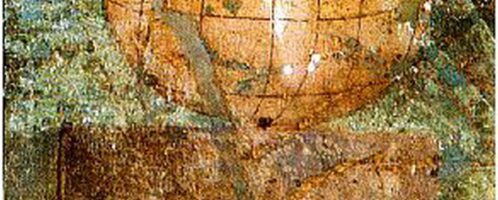
Roman fresco depicting a globe with a mountain. The object dates to the 1st century CE and was found at the Villa Boscoreale near Pompeii. The artifact is located at the Metropolitan Museum of Art, New York (USA).
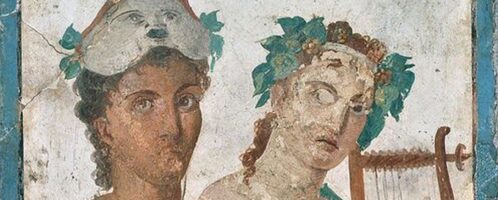
Roman fresco from Pompeii depicting a man wearing a theatrical mask and a woman with a wreath playing a lyre. The object is located at the National Archaeological Museum in Naples, Italy. Dated to the 1st century CE.
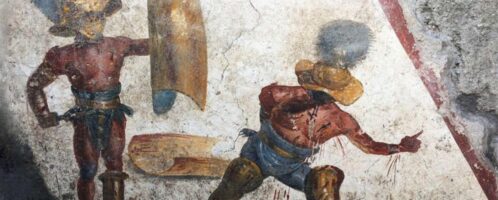
Fragment of a Roman fresco depicting a fight between two gladiators. The painting was found north of the Pompeii archaeological park.
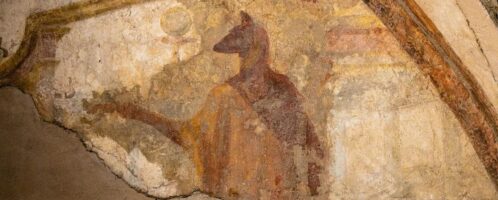
In the Roman baths of the Emperor Caracalla (reigned 211-217 CE), there is a preserved fresco depicting Anubis, which dates back to the 2nd century CE.
Roman amphorae made of banded agate, dating from around 1st BCE – 1st century CE. An amphorae was a small, amphora-shaped vessel usually used for storing expensive oils, perfumes or aromatic essences.

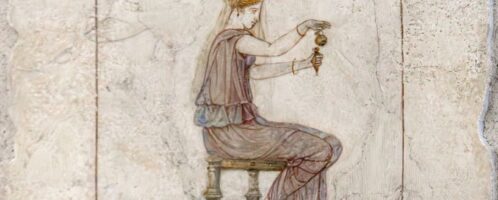
A fresco from the Roman villa known as Casa della Farnesina, depicting a woman pouring perfume. Dating back to the 1st century BC, it is located in the National Museum in Rome.
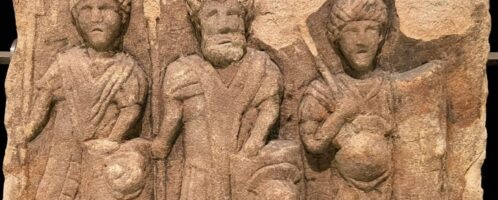
Fragment of a Roman tombstone depicting three legionaries. The object was discovered on Croy Hill on the Antonine Wall and is currently in the collections of the National Museum of Scotland in Edinburgh, Scotland.
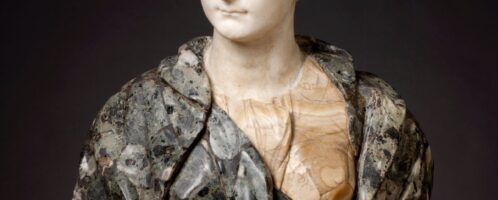
Bust of Agrippina the Younger, made of marble and dated to the 1st century CE. The object is located at the Rhode Island School of Design Museum (USA).
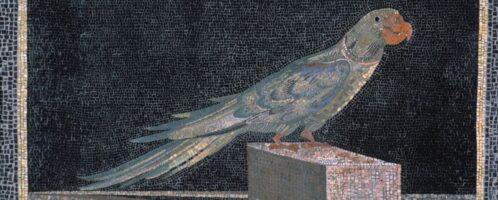
Roman mosaic with a parrot, dating from the 2nd century BCE; currently in the collection of the Pergamon Museum (Berlin, Germany).