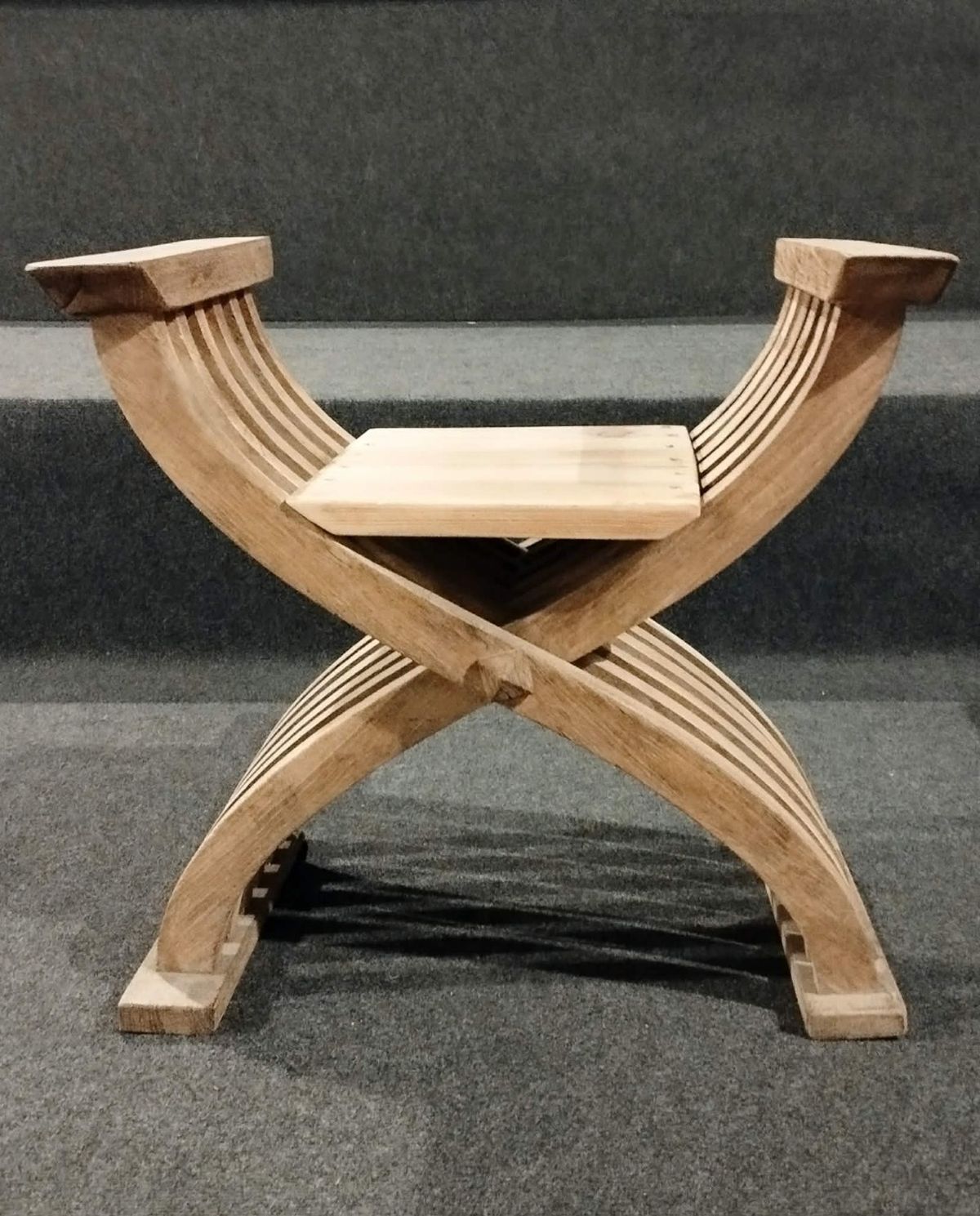
Curule chair (sella curulis) is a folding stool with crossed straight or curved legs, originally backless. It was known to many ancient cultures of the Mediterranean basin, including the Greeks and Egyptians (it reached China via the Silk Road). The ancient Romans most likely adopted it from the Etruscans.
Curule chairs were made from a variety of materials, from ivory and various types of wood to metal. They were often upholstered in silk or leather, decorated with animal carvings, and inlaid.
Few were permitted to sit on them, as they were symbols of power and were reserved for only the most important figures in the state: during the kingdom, these were monarchs; during the republic, the highest officials such as consuls and praetors (known as curule magistrates) and dictators; and, after the rise of the empire, of course, emperors.
During his reign, Julius Caesar had exclusive use of curule chairs placed in the most important parts of the city of Rome.
Despite their prestigious nature, curule chairs were quite uncomfortable and sometimes even caused problems. Such an unpleasant situation befell the first emperor, Octavian Augustus, during the ceremonial opening of the Theatre of Marcellus. Then, before the opening performance began, the curule chair in which the First Citizen was to sit collapsed, causing him to fall to the ground in full view of the assembled senators and citizens. This seemingly insignificant incident must have made an impression on his contemporaries, as its memory has survived to this day.
In later centuries, the curule chair, which came to be known as Dante’s chair, underwent various modifications (including the common practice of adding a backrest). In the Middle Ages and the Renaissance, it was still considered a piece of furniture intended for the upper classes, often used by the aristocracy and Church leaders.