If you have found a spelling error, please, notify us by selecting that text and pressing Ctrl+Enter.

Curiosities of ancient Rome (Food)

The world of ancient Romans abounded in a number of amazing curiosities and information. The source of knowledge about the life of the Romans are mainly works left to us by ancient writers or discoveries. The Romans left behind a lot of strange information and facts that are sometimes hard to believe.

Dormouse – furry snack for rich

The gray dormouse (Glis glis) is a rodent similar in size to a rat, found throughout almost all of Europe. The ancient Romans valued it for its meat – initially, they only hunted it, but by the 1st century BCE, it was already widely farmed. Varro describes dormouse rearing in his work De re rustica (“On the Rural Economy”), while Apicius provides a recipe for its preparation in De re coquinaria libri decem (On the Ten Books of Culinary Art).
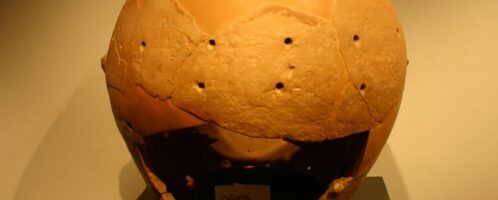
Glirarium – a container for dormouse

Lettuce – Roman way to sleep

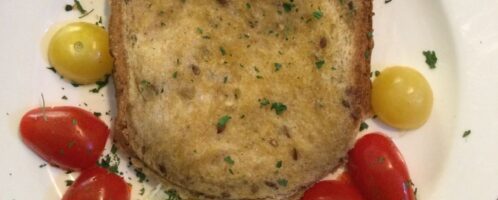
Today, lettuce is a light appetizer or side dish, but for the ancient Romans it was much more functional. They considered it a medicinal plant — especially helpful for sleep and digestion problems.

Lettuce

Frumentatio – distribution of grain in ancient Rome

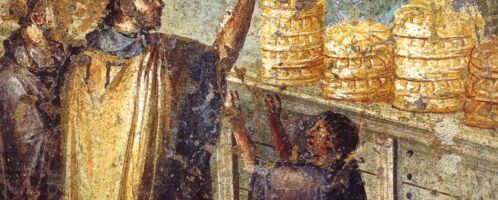
Frumentatio was one of the most important food distribution programs in ancient Rome, which played a key role in ensuring the social and political stability of the empire. It consisted of distributing free or subsidized grain (mainly unmilled wheat) to the Roman population, especially in Rome itself, where the problem of hunger could lead to riots and destabilization of the political scene.

Fresco from Pompeii showing a bread seller

Olive oil – golden treasure of ancient Rome

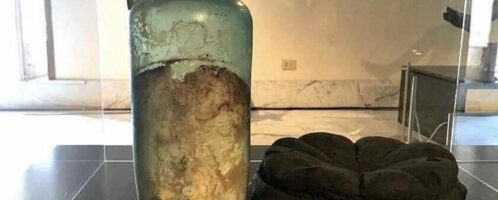
Olive oil was not only a key product in the daily life of ancient Romans, but also a symbol of status, wealth and civilization. Its use went far beyond cooking – in Rome, olive oil was widely used in medicine, religion, cosmetics and household.

The oldest known olive oil bottle

Roman mămăligă

One of the founding myths of the Romanian nation is its direct descent from those conquered by the Romans in the 1st century CE Dacians. To what extent is this true? An alternative theory is the origin of the Vlachs, the ancestors of the Romanians, from Romanian-speaking communities from the areas of today’s Albania, who fled from the Turkish threat to the north, to the Carpathians (participating in the ethnogenesis of our Boykos, Lemkos and Hutsuls) and to the Danube lowlands – let linguists and geneticists decide. The fact is that to this day, only in Romania can parents name their children Decebalus, Hadrian, Trajan or Ovid (the famous poet is buried in Constanta on the Black Sea).

Mămăligă

Pears in Roman cuisine

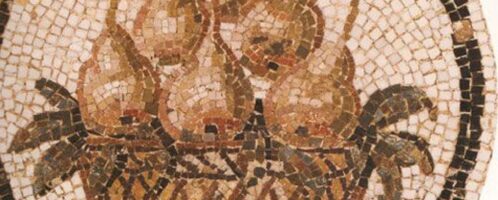
Pears were known and used in ancient Rome. Pliny the Elder states that there were 41 known varieties of pear, each of which had a different taste, appearance and name. They were known, for example “Tiberian”, from the name of Emperor Tiberius, or “Falernian”, from the Falernum wine, known for its sweet taste.

Roman mosaic showing pears

Spelling error report

The following text will be sent to our editors: