If you have found a spelling error, please, notify us by selecting that text and pressing Ctrl+Enter.

Curiosities of ancient Rome

The world of the ancient Romans was rich in extraordinary, and sometimes even surprising, facts. We draw our knowledge of Roman daily life, customs, and mentality primarily from works left by ancient writers and historians. It is thanks to them that we discover information that is astonishing today – sometimes even hard to believe. Below are some interesting facts that reveal a lesser-known and less obvious side of the Roman world.

I encourage you to submit your own suggestions and to report any corrections or inaccuracies.

Mosaic depicting Pan and Hamadryad

The mosaic of Pan and the Hamadryad, found in Pompeii, is a fascinating example of Roman art. Such works were popular among Roman householders, who were eager to decorate their villas with mythological scenes, often imbued with erotic or metaphorical symbolism.

Mosaic depicting Pan and Hamadryad

Bloodletting as form of treatment in ancient times

Aulus Cornelius Celsus was a Roman scholar and encyclopedist of the 1st century CE, best known as the author of De Medicina, one of the most important sources of medical knowledge in antiquity. In his work, he described various methods of treating general illnesses, including recommending bloodletting (sanguis mittendus) as a preventive measure in the event of the body becoming overloaded with excess “fluids”.

Fresco from Pompeii showing a wounded Aeneas who has his wounds dressed

Rubbed amber attracts light objects

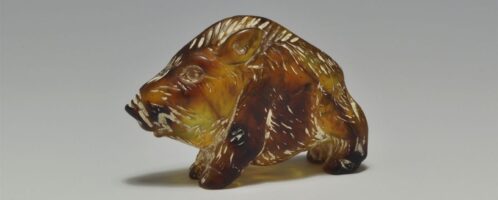
Pliny the Elder in his “Natural History” (Book XXXVII, Chapter 12) described the electrostatic properties of amber. He noticed that when rubbed with the fingers, under the influence of heat, it attracted light objects such as chaff, dry leaves and fibers. This observation of Pliny shows how ancient scholars observed and described natural phenomena that were not explained scientifically until many centuries later.

Roman boar figurine made of amber

Ostriches according to Pliny the Elder

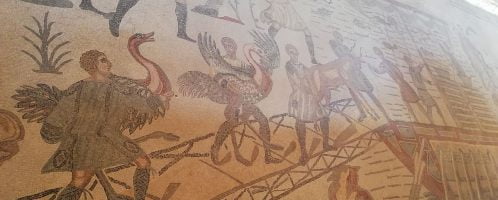
Pliny the Elder described in his “Natural History” that ostriches would bury their heads in a bush to hide from danger. This belief has persisted to this day as a popular myth, despite the lack of evidence for this behaviour in these birds. In reality, ostriches would place their heads low to the ground to hide, which may have given the impression that they were “burying it in the sand.”

Roman mosaic showing ostriches being loaded onto ship

Lettuce – Roman way to sleep

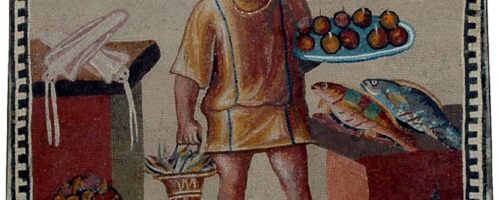
Today, lettuce is a light appetizer or side dish, but for the ancient Romans it was much more functional. They considered it a medicinal plant — especially helpful for sleep and digestion problems.

Lettuce

Spelling error report

The following text will be sent to our editors: