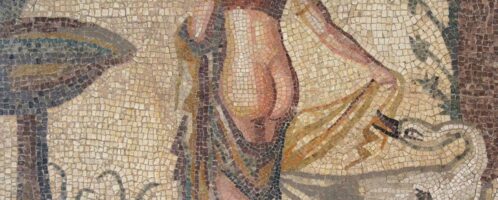
Roman floor mosaic depicting goddess Diana
Roman floor mosaic depicting the goddess Diana, made in the eastern Mediterranean. Dated to the 4th-5th century CE, the piece is located at the Royal Ontario Museum in Toronto, Canada.
If you have found a spelling error, please, notify us by selecting that text and pressing Ctrl+Enter.
The world of the ancient Romans was rich in extraordinary, and sometimes even surprising, facts. We draw our knowledge of Roman daily life, customs, and mentality primarily from works left by ancient writers and historians. It is thanks to them that we discover information that is astonishing today – sometimes even hard to believe. Below are some interesting facts that reveal a lesser-known and less obvious side of the Roman world.
I encourage you to submit your own suggestions and to report any corrections or inaccuracies.
Roman floor mosaic depicting the goddess Diana, made in the eastern Mediterranean. Dated to the 4th-5th century CE, the piece is located at the Royal Ontario Museum in Toronto, Canada.

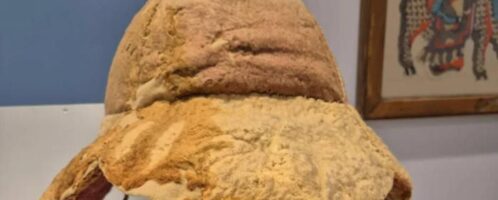
The Bolton Museum in Bolton, England, houses a nearly 2,000-year-old Roman military sun hat—one of only three such items preserved in the world. Made of wool, it dates from around the 2nd century CE.
Leda and Swan in Roman mosaic; the object dates to the 2nd-3rd century CE. In Greek mythology, Zeus, enchanted by the beautiful Leda, took the form of a swan and approached her on the Eurotas River. Their union gave birth to, among others, Helen of Troy, whose beauty led to the Trojan War. The motif of Leda and the Swan has fascinated artists for centuries – from ancient painting to the works of Leonardo da Vinci and Rubens. The object is located in the Archaeological Museum in Old Paphos, Cyprus.
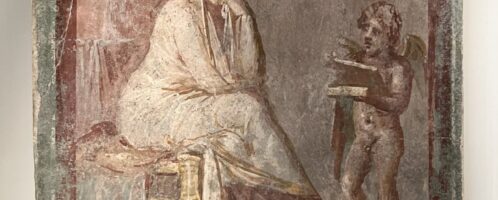
Fresco depicting a woman with Cupid, who hands her a golden box. The object dates to the 1st century CE and was discovered in the House of Meleager in Pompeii. On display at the Ashmolean Museum in Oxford, England.
Black-and-white bird on a Roman fresco. The object dates to the 1st century CE; discovered in the so-called House of the Golden Bracelet in Pompeii.

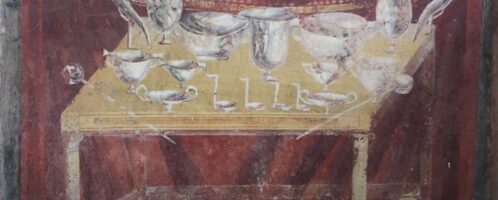
Roman fresco depicting a table laden with dishes. The painting was intended to symbolize the deceased’s wealth. The object was discovered in the tomb of Caius Vestorius Priscus in Pompeii.
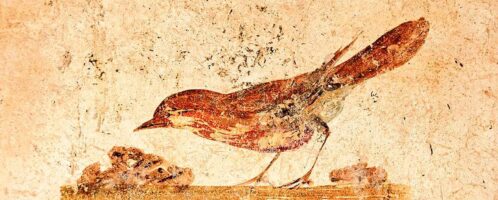
Roman fresco depicting a bird. Dating back to the 1st century CE, it comes from the Villa of Poppaea in Oplontis (central Italy).
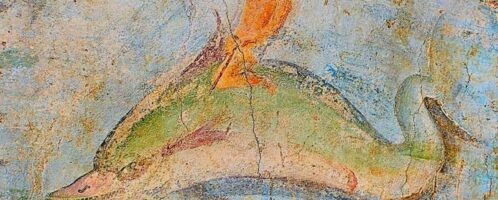
Fragment of a Roman fresco depicting a man riding a dolphin. The object dates to the 1st century CE and is located at the National Roman Museum in Rome.
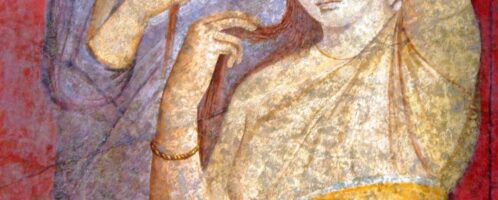
Roman fresco depicting a young woman gazing at the viewer. The object dates to the 1st century BCE and was discovered at the Villa of the Mysteries in Pompeii.
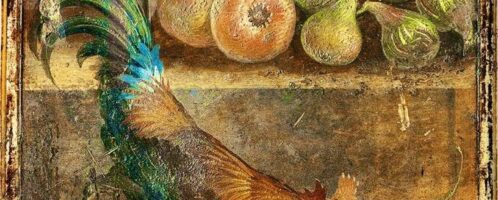
Roman fresco depicting a rooster eating fruit. Dated to the 1st century CE, discovered in Pompeii.