Roman children wore “bulla”
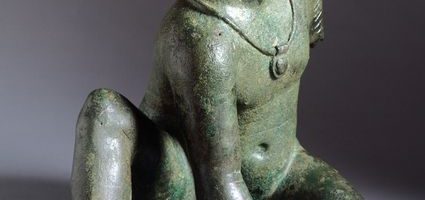
Children up to the age of fourteen wore a medallion called a “bulla” around their necks. The medallions were designed to protect children from evil spirits and forces.
If you have found a spelling error, please, notify us by selecting that text and pressing Ctrl+Enter.
The world of the ancient Romans was rich in extraordinary, and sometimes even surprising, facts. We draw our knowledge of Roman daily life, customs, and mentality primarily from works left by ancient writers and historians. It is thanks to them that we discover information that is astonishing today – sometimes even hard to believe. Below are some interesting facts that reveal a lesser-known and less obvious side of the Roman world.
I encourage you to submit your own suggestions and to report any corrections or inaccuracies.
Children up to the age of fourteen wore a medallion called a “bulla” around their necks. The medallions were designed to protect children from evil spirits and forces.
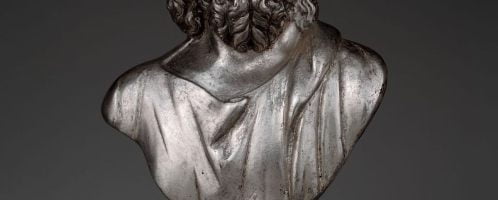
Roman bust of the god Serapis. The object was made of silver; dated to the 2nd century CE.
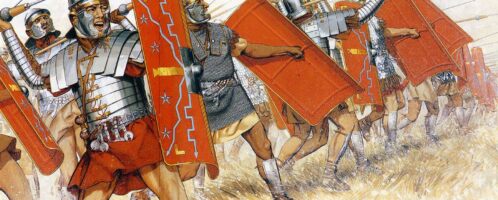
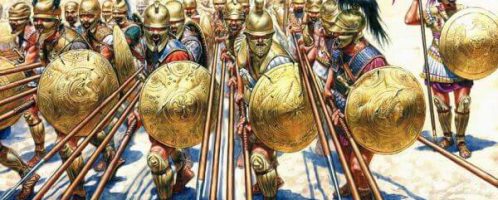
The end of the Greek and Macedonian phalanxes brought clashes with Roman legions fighting in a more flexible manipular formation. The defeats of the Hellenistic armies at Cynoscephalae (197 BCE), Magnesia (190 BCE) and Pydna (168 BCE) ended the centuries-old reign of the phalanx on the fields of an ancient battle.
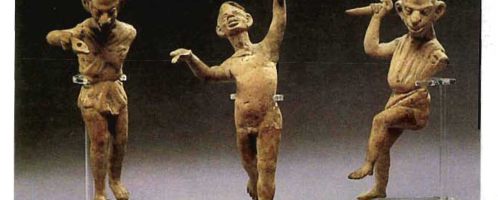
In 46 BCE Julius Caesar defeated the still opposing optimates (including Cato the Younger) under Thapsus. To celebrate the victory in Africa, Caesar’s supporters decided to organize games (ludi), during which mime competitions were to be held.
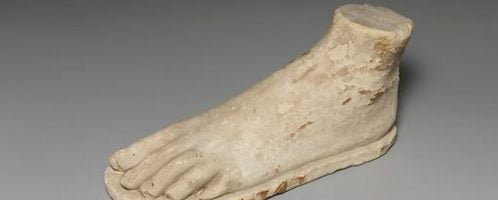
Greco-Roman texts provide a great deal of information about the ancients’ views on religious matters, many of which refer to very mundane matters. Often the superstitions of ordinary people from two thousand years ago are present and very popular superstitions. How many people have not stood up at least once with the famous “left leg”? Or vice versa, he ascribed his happiness to his right foot, as did the Germans and the English in their proverbs (“Auf rechten Füssen ist gut stehen” tudzież “Let’s get off on the right foot this year”)?
Tents were in use already in ancient times. The ancient Romans used them mainly in marching camps (castra aestiva), which were pitched during military campaigns every day. We owe much information about their construction to the excavations at Vindolanda or Newstead, where leather materials have been preserved. Information about the use of tents by the Romans in war is also provided by reliefs from Trajan’s column in Rome, where selected moments of the Dacian War are depicted.

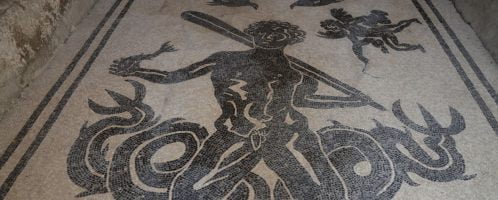
Roman mosaic depicting a sea scene from a female dressing room (apodyterium) in the thermal baths at Herculaneum. The scene shows the sea god Triton, holding the wheel and a fish, surrounded by dolphins, an octopus and possibly Cupid.