What arts did ancient Romans like?
In the work “Daily Life in Ancient Rome” by Jérôme Carcopino, the author writes that the ancient Romans chose primarily dramas with macabre content, full of horror that made the viewer tremble.
If you have found a spelling error, please, notify us by selecting that text and pressing Ctrl+Enter.
The world of the ancient Romans was rich in extraordinary, and sometimes even surprising, facts. We draw our knowledge of Roman daily life, customs, and mentality primarily from works left by ancient writers and historians. It is thanks to them that we discover information that is astonishing today – sometimes even hard to believe. Below are some interesting facts that reveal a lesser-known and less obvious side of the Roman world.
I encourage you to submit your own suggestions and to report any corrections or inaccuracies.
In the work “Daily Life in Ancient Rome” by Jérôme Carcopino, the author writes that the ancient Romans chose primarily dramas with macabre content, full of horror that made the viewer tremble.
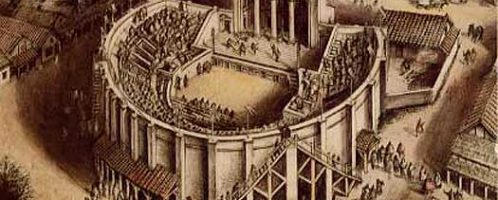
Portus Adurni is the best-preserved Roman fort north of the Alps. It was established in the 3rd century CE and is situated in Portsmouth (England).

Beautiful silver fibula from Roman times. The object is dated to the 1st century CE and was found in Viminacium (present Serbian Kostolac).
Beautiful Roman glass objects: a dish and a spoon. Dated to 75-125 CE. The objects are located in the Corning Museum of Glass (USA).

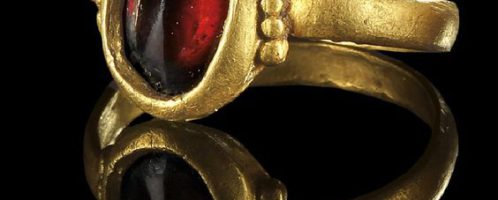
Roman golden ring with garnet. Object dated to the 3rd century CE.
Roman aqueduct in Zaghouan (Tunisia), built during the reign of Emperor Hadrian (117-138 CE) to supply water from mount Djebel Zaghouan to Carthage. It was one of the longest aqueducts built by the ancient Romans – it provided water at a distance of 132 km.

Ruins of a Roman villa in the ancient city of Nora, near modern Pula (Sardinia, Italy).

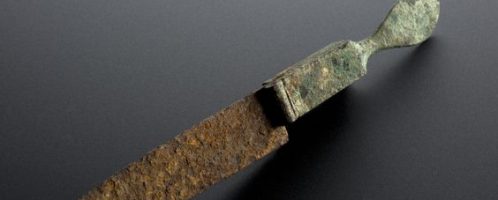
Well-preserved Roman knife used in surgical operations. Dated to 2nd BCE – 4th century CE.