Interesting balsamarium
Interesting appearance of the Roman vessel for storing lotions (balsamarium). The bronze object dates back to the 2nd century CE.
If you have found a spelling error, please, notify us by selecting that text and pressing Ctrl+Enter.
The world of the ancient Romans was rich in extraordinary, and sometimes even surprising, facts. We draw our knowledge of Roman daily life, customs, and mentality primarily from works left by ancient writers and historians. It is thanks to them that we discover information that is astonishing today – sometimes even hard to believe. Below are some interesting facts that reveal a lesser-known and less obvious side of the Roman world.
I encourage you to submit your own suggestions and to report any corrections or inaccuracies.
Interesting appearance of the Roman vessel for storing lotions (balsamarium). The bronze object dates back to the 2nd century CE.

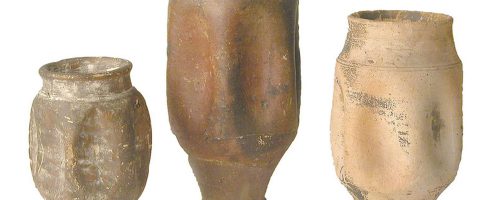
Beautiful earthenware from the New Forest (southern England) now in The Salisbury Museum, in Salisbury, southern England. New Forest has been England’s National Park since 2005; in ancient times, ceramics were mass-produced there.
Gold coin of Maxentius from the reign of 306-312 CE. Maxentius, who was Maximian’s son, was not included in the tetrarchy system. He was given power by the praetorians.

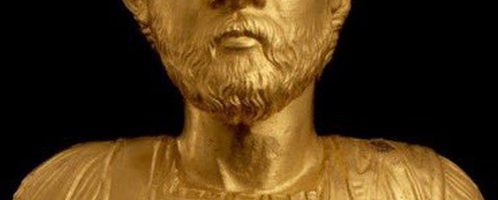
A golden bust of Marcus Aurelius, made from one piece of gold. Object dated to the middle of the 2nd century CE.
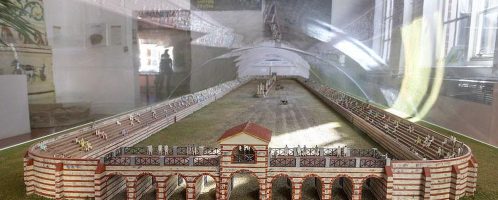
Reconstruction of the Roman circus in Colchester (England). The object was discovered in 2005 and is the only find of its kind in Britain. The model is located in the Roman Circus Visitor Center.
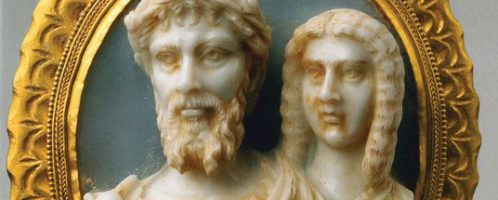
Roman cameo depicting the busts of Emperor Septimius Severus and Julia Domna. The object is made of sardonyx and gold and dates back to the beginning of the 3rd century CE.
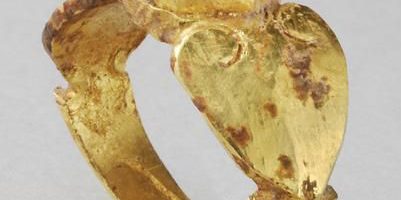
Completely made of the gold Roman ring. Dated to the 3rd century CE.