If you have found a spelling error, please, notify us by selecting that text and pressing Ctrl+Enter.

Curiosities of ancient Rome

The world of the ancient Romans was rich in extraordinary, and sometimes even surprising, facts. We draw our knowledge of Roman daily life, customs, and mentality primarily from works left by ancient writers and historians. It is thanks to them that we discover information that is astonishing today – sometimes even hard to believe. Below are some interesting facts that reveal a lesser-known and less obvious side of the Roman world.

I encourage you to submit your own suggestions and to report any corrections or inaccuracies.

Roman fresco showing dancing inhabitants of Troy

Roman fresco showing dancing inhabitants of Troy leading a horse through the city gates. At the top of the fresco you can see Cassandra, the daughter of Priam (king of Troy), who predicted the tragic defeat of the city, but no one wanted to listen to her. The woman leaves the city with lit torches. The object was discovered in Pompeii and dates back to the 1st century CE. The artifact is located in the National Archaeological Museum of Naples.

Roman fresco showing dancing inhabitants of Troy

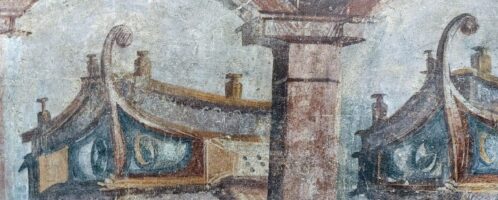
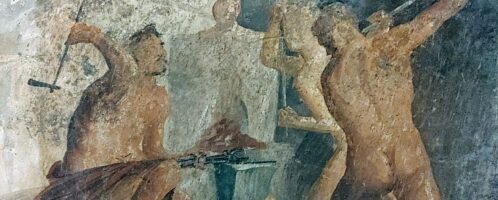
Hephaestus’ workshop on fresco

Roman fresco showing Hephaestus’ workshop. The scene shows the Cyclops forging weapons for the heroes. The object was discovered in Pompeii and dates back to the 1st century CE. The artifact is located in the National Archaeological Museum of Naples.
Hephaestus' workshop on fresco

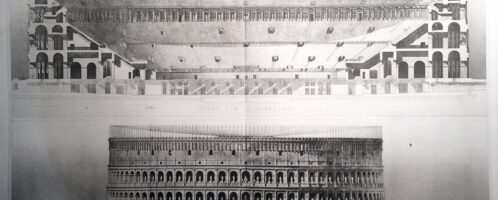
19th century reconstruction of Colosseum

This is not another computer visualization of a famous monument. It’s a work of art in itself. It was made in 1829 and its author is Louis Duc, a scholarship holder of the French Academy in Rome. Reconstruction was his scholarship work.

19th century reconstruction of Colosseum

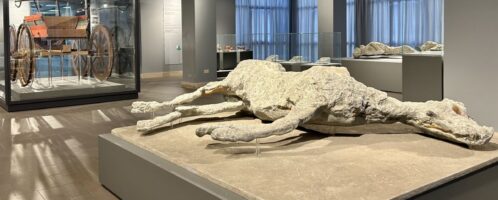
Plaster cast of horse

Plaster cast of a horse that died during the eruption of Vesuvius in 79 CE, in one of the houses of Villa Civita Giuliana, located near Pompeii. The object is located in the Archaeological Park of Pompeii.

Plaster cast of horse

Reconstruction of preserved ancient chariot

Reconstruction of a preserved ancient chariot that was discovered in one of the houses of Villa Civita Giuliana, located near Pompeii. According to scientists, the chariot was ceremonial and was made of bronze with silver decorations. The object is located in the Archaeological Park of Pompeii.

Reconstruction of preserved ancient chariot

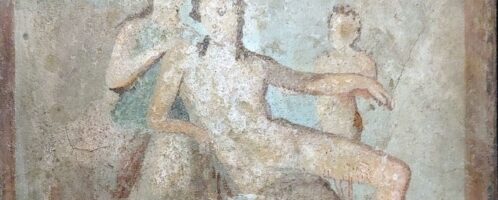
Wounded Adonis on Roman fresco

A wounded Adonis in a Roman fresco being comforted by the goddess of beauty, Aphrodite. According to Greek mythology, Adonis was a beautiful young man with whom Aphrodite and Persephone (the wife of Hades, the god of hell) were in love. Ares decided to solve their dispute by sending a boar to attack him.

Wounded Adonis on Roman fresco

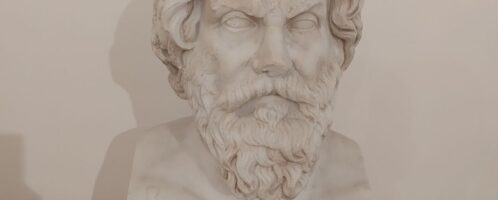
Roman sculpture of Antisthenes

Roman sculpture of Antisthenes, a Greek philosopher who is the creator of cynicism – a philosophy focusing on the analysis of virtue and considering it the most important value. The Greek lived in the 5th-4th centuries BCE.

Roman sculpture of Antisthenes

Spelling error report

The following text will be sent to our editors: