
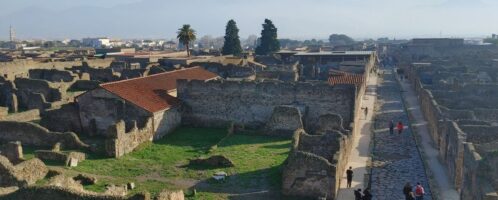
Panorama of Pompeii from defensive walls
Panorama of Pompeii from the defensive walls. Pompeii (Pompeii), also called Pompeii, was considered one of the most attractive cities of ancient Rome. The buildings were built with harmony and beauty.
If you have found a spelling error, please, notify us by selecting that text and pressing Ctrl+Enter.
The world of the ancient Romans was rich in extraordinary, and sometimes even surprising, facts. We draw our knowledge of Roman daily life, customs, and mentality primarily from works left by ancient writers and historians. It is thanks to them that we discover information that is astonishing today – sometimes even hard to believe. Below are some interesting facts that reveal a lesser-known and less obvious side of the Roman world.
I encourage you to submit your own suggestions and to report any corrections or inaccuracies.
Panorama of Pompeii from the defensive walls. Pompeii (Pompeii), also called Pompeii, was considered one of the most attractive cities of ancient Rome. The buildings were built with harmony and beauty.
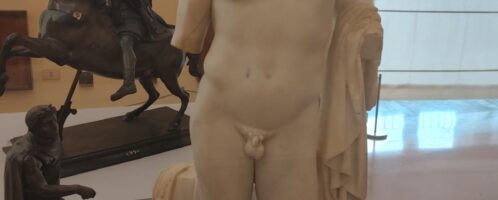
Roman sculpture depicting Alexander the Great or another Hellenic ruler. The artifact is located in the National Archaeological Museum of Naples.
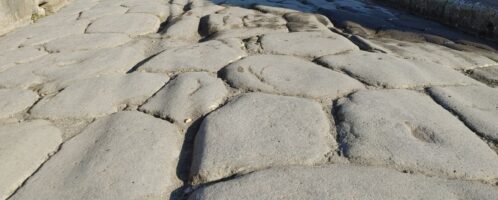
Roman street in Pompeii, with still well-preserved cobblestones. The construction of Roman roads was a true masterpiece of Roman engineering. The road-building technique was taken over by the Etruscans and initially closely imitated. Over time, new technologies began to be adopted.
Fragment of a Roman fresco with black inscriptions. The painting was found on the left wall of the corridor leading to the ludus gladiatorius. As it turns out, the text had pleasant content: “To Popidius Rufus, unsurpassed organizer of gladiator games, to the protectors of the colonists, with well wishes”. The artifact is located in the National Archaeological Museum of Naples.

Castellum Aquae in Pompeii was a water dispenser that supplied water to the entire city. The building was located at the highest point of Pompeii (42 meters) and was connected to the Serino aqueduct.

In ancient Rome, during its many years of existence, the army played a key role in conquests, maintaining order, and spreading the empire’s influence. However, with Rome’s expansion, the need to recruit soldiers from various regions and cultures led to the formation of special auxiliary units. These soldiers, often not Roman citizens, had their own path to citizenship through receiving a Roman military diploma.

Whenever I look at the ruins of ancient Rome, I wonder: how could these magnificent buildings be allowed to perish? Why have they not survived to our times? What a pity you can’t see them today…

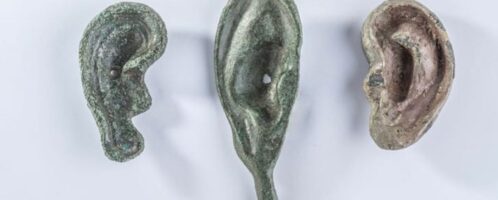
In central Italy, near the village of San Casciano dei Bagni, unusual finds were discovered in the area of a former Etruscan pool fed by hot springs. Among the discovered artifacts are bronze ears that ancient Romans put on – according to researchers – to ask the gods to hear their prayers. The finds also include sculptures showing body parts, e.g. phallus, womb, breasts, leg or arm.
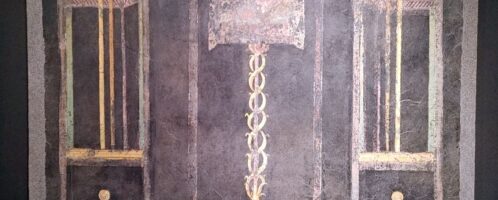
Roman fresco from a bedroom in a country estate in Gragnano (south of Italy). The object dates back to the 1st century CE.
A rescript issued by Emperor Marcus Aurelius in 176, prohibiting the practice of foreign religions, confirmed the persecution of Christians. The greatest intensity of persecution in that period occurred in 177 in Lugdunum, where Bishop Poteinos, who was over 90 years old, was killed. Saint Justin was martyred in Rome itself.
