Villa romana de Las Torres
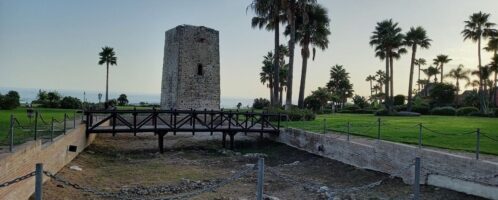
In the south of Spain, in Estepona, there are the remains of a small Roman resort – Villa romana de Las Torres – located on the coast, right next to the Torre Guadalmansa lighthouse, from late medieval times.
If you have found a spelling error, please, notify us by selecting that text and pressing Ctrl+Enter.
The world of the ancient Romans was rich in extraordinary, and sometimes even surprising, facts. We draw our knowledge of Roman daily life, customs, and mentality primarily from works left by ancient writers and historians. It is thanks to them that we discover information that is astonishing today – sometimes even hard to believe. Below are some interesting facts that reveal a lesser-known and less obvious side of the Roman world.
I encourage you to submit your own suggestions and to report any corrections or inaccuracies.
In the south of Spain, in Estepona, there are the remains of a small Roman resort – Villa romana de Las Torres – located on the coast, right next to the Torre Guadalmansa lighthouse, from late medieval times.
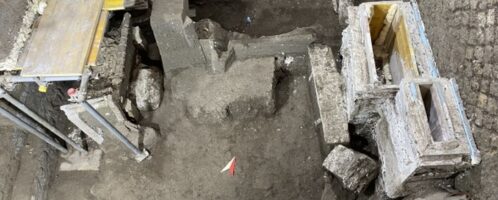
In August 2023, near Pompeii, in the villa Civita Giuliana, the remains of a slave quarter were discovered. As it turns out, slaves lived in extremely simple conditions, along with rodents.
Roman sculpture depicting Herodotus, the Greek historian, called the “father of history”; dating back to the 3rd century CE. The object is a copy of a Greek original from the 4th century BCE. The artifact is located in the National Archaeological Museum of Naples.

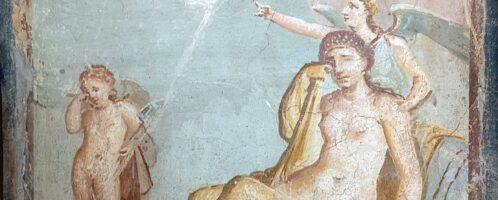
Roman fresco showing the abandoned Ariadne weeping and being comforted by Revenge, who points to Theseus’ ship. According to Greek mythology, Ariadne helped Theseus escape from the maze after killing the Minotaur. After completing the task, Theseus took Ariadne with him, whom he wanted to marry in Athens. Ultimately, however, he left her on the island of Naxos on the orders of Dionysus, who wanted to marry a woman.
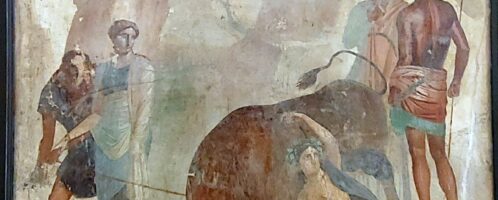
Roman fresco showing Dirke tied to the horns of a bull. According to mythology, Dirke was subjected to this death penalty by the sons of Antiope – Amphion and Zetus – the first wife of the king of Thebes, Lycus. Dirke, as Lykos’ second wife, took revenge on her predecessor. The facility is located in Pompeii. The artifact is located in the National Archaeological Museum of Naples.
Roman portrait showing a woman. This incredibly realistic portrait was made using mosaics and dates back to the 1st century CE. Artifact discovered in Pompeii; the object is located in the National Archaeological Museum of Naples.

You have certainly come across many interesting visualizations on the Internet showing what Rome might have looked like in the times of the Empire. Impressive, right? However, it is always worth considering how much truth there is in these beautiful graphics. And I don’t mean only whether the structure of individual buildings was correctly drawn by a graphic artist, because the question of the architecture of the buildings in ancient Rome will always be a matter of interpretation of archaeological data, hypotheses, etc. I rather mean whether the appearance the city as a whole is realistic.

Roman sculpture depicting Homer. The object is a Roman copy, from the reign of Emperor Hadrian (117-138 CE), of a Greek original from the 4th century BCE. The artifact is located in the National Archaeological Museum of Naples.

Roman fresco showing a pair of dancing centaurs. The object dates back to the 1st century CE; discovered in Stabiae. The artifact is located in the National Archaeological Museum of Naples.
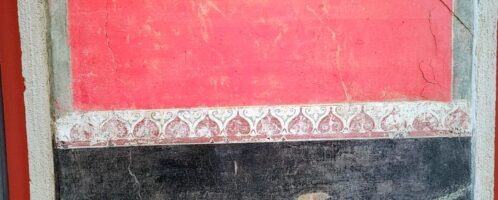
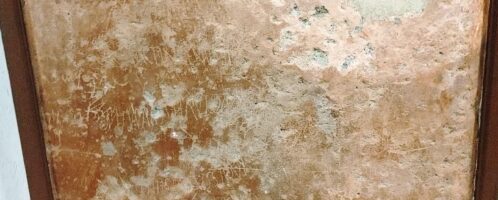
Preserved fragment of a wall from Pompeii with an enigmatic engraved message. We read: “If you ever had the opportunity to remark with how much talent the young Sepumius plays the snake game, whether you are a spectator of the theatre or have a passion for horses, may you always keep the pans of the scale in balance, wherever you are”.