If you have found a spelling error, please, notify us by selecting that text and pressing Ctrl+Enter.

Curiosities of ancient Rome

The world of the ancient Romans was rich in extraordinary, and sometimes even surprising, facts. We draw our knowledge of Roman daily life, customs, and mentality primarily from works left by ancient writers and historians. It is thanks to them that we discover information that is astonishing today – sometimes even hard to believe. Below are some interesting facts that reveal a lesser-known and less obvious side of the Roman world.

I encourage you to submit your own suggestions and to report any corrections or inaccuracies.

Round tablet depicting scene of Hercules catching Ceryneian hind

Round tablet depicting the scene of Hercules catching the Ceryneian hind. This was the third labor of Hercules and was extremely difficult to perform because the animal was very fast; the hero needed a year for this. The object dates back to the 1st century CE; discovered in Pompeii. The artifact is located in the National Archaeological Museum of Naples.
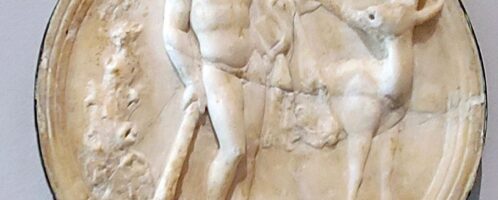
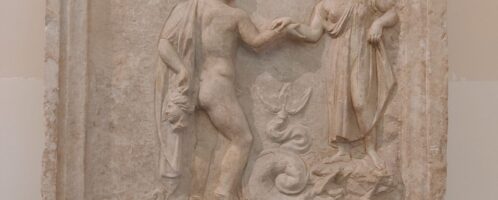
Round tablet depicting scene of Hercules catching Ceryneian hind

Fragment of Roman fresco from tavern in Pompeii

Fragment of a Roman fresco from a tavern in Pompeii. The inscription in Greek reads: “Here lives the son of Zeus, Heracles the glorious conqueror; let evil stay away”. The artifact is located in the National Archaeological Museum of Naples.
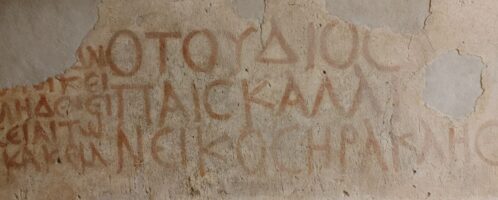
Fragment of Roman fresco from tavern in Pompeii

Sculptures showing Harmodios and Aristogeiton

Sculptures showing Harmodios and Aristogeiton, murderers of the sons of the Greek tyrant Pisistrates – Hipparchus and Hippias. The sculptures are a Roman copy from the 2nd century CE. The originals once decorated the Athenian agora, as proof of the victory of Athenian democracy and freedom.

Sculptures showing Harmodios and Aristogeiton

Ancient river deity

Roman sculpture showing an ancient river deity. The object dates back to the 2nd century CE. The artifact is located in the National Archaeological Museum of Naples.

Ancient river deity

Roman statue showing Amor with torch

Roman statue showing Amor with a torch. The object was discovered in Herculaneum. The item is made of bronze and dates back to the 1st century CE. The artifact is located in the National Archaeological Museum of Naples.
Roman statue showing Amor with torch

Roman sculpture of Faun

Roman sculpture of a Faun, god of fertility and protector of forests, who had hooves and goat horns. It is a Roman copy from the 2nd century CE. Greek original from the 2nd-1st century BCE. The artifact is located in the National Archaeological Museum of Naples.

Roman sculpture of Faun

Spelling error report

The following text will be sent to our editors: