If you have found a spelling error, please, notify us by selecting that text and pressing Ctrl+Enter.

Curiosities of ancient Rome

The world of the ancient Romans was rich in extraordinary, and sometimes even surprising, facts. We draw our knowledge of Roman daily life, customs, and mentality primarily from works left by ancient writers and historians. It is thanks to them that we discover information that is astonishing today – sometimes even hard to believe. Below are some interesting facts that reveal a lesser-known and less obvious side of the Roman world.

I encourage you to submit your own suggestions and to report any corrections or inaccuracies.

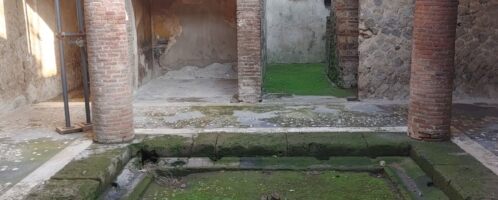
Atrium in Villa of the Papyri

Atrium in the so-called Villa of the Papyri in Herculaneum. The atrium was a representative room in a Roman house that was intended to stand out and impress visitors. It was the first room after passing through the entrance hall.
Atrium in Villa of the Papyri

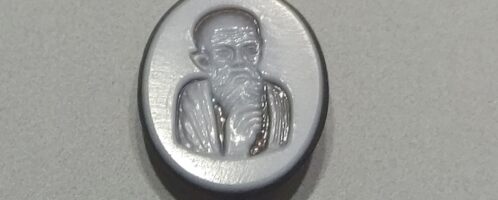
Cameo of Philemon

Cameo depicting Philemon, a Greek comedy writer who lived in the 4th-3rd centuries BCE. The artifact is located in the National Archaeological Museum of Naples.

Cameo of Philemon

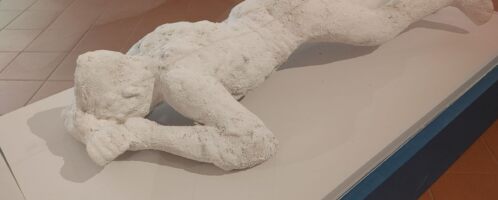
Plaster cast of young woman

A plaster cast of a young woman who died in Pompeii as a result of the eruption of Mount Vesuvius in 79 CE. Her hips were wrapped in cloth. The artifact is on display in Pompeii.

Plaster cast of young woman

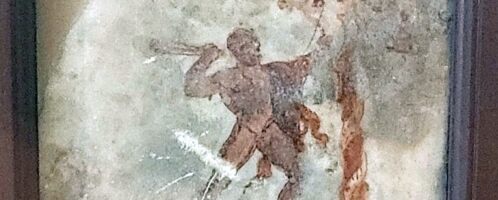
Roman fresco showing young Harpocrates

Roman fresco showing young Harpocrates, son of Isis and Osiris. The depicted deity approaches the altar, which is entangled by a snake eating sacrifices. Dated to the 1st century CE. The object was discovered in Herculaneum. The artifact is located in the National Archaeological Museum of Naples.

Roman fresco showing young Harpocrates

Roman sculpture of Dionysus (Bacchus) and Satyr

Roman bronze and silver sculpture showing Dionysus (Bacchus) and Satyr. The object was discovered in Pompeii and dates back to the mid-1st century CE. The artifact is located in the National Archaeological Museum of Naples.

Roman sculpture of Dionysus (Bacchus) and Satyr

Roman altar of certain Gaius Julius Alpinus Classicianus

Roman altar of a certain Gaius Julius Alpinus Classicianus, which was found in the ruins of the Roman defensive walls of Londinium. Thanks to the accounts of the Roman historian Tacitus, we know that the man was the minister of finance in Britain and was sent there by Nero after the fall of Boudica’s rebellion (60-61 CE).

Roman altar of certain Gaius Julius Alpinus Classicianus

Spelling error report

The following text will be sent to our editors: