If you have found a spelling error, please, notify us by selecting that text and pressing Ctrl+Enter.

Curiosities of ancient Rome

The world of the ancient Romans was rich in extraordinary, and sometimes even surprising, facts. We draw our knowledge of Roman daily life, customs, and mentality primarily from works left by ancient writers and historians. It is thanks to them that we discover information that is astonishing today – sometimes even hard to believe. Below are some interesting facts that reveal a lesser-known and less obvious side of the Roman world.

I encourage you to submit your own suggestions and to report any corrections or inaccuracies.

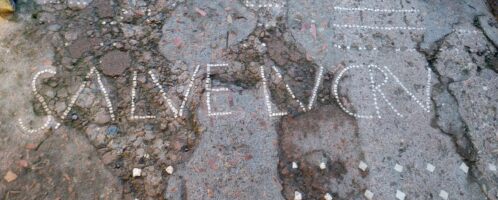
Mosaic with inscription SALVE LUCRU

One of the Roman houses from the 1st century BCE in Pompeii had a very interesting inscription on the floor in the entrance – SALVE LUCRU, i.e. “Welcome, money”. The mosaic decorated the house of a certain Publius Vedius Siricus, who was a significant city politician and trader. Every day he was visited at home by supporters who read this inscription.
Mosaic with inscription SALVE LUCRU

Sphinx on Roman fresco

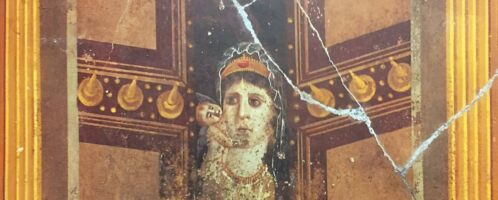
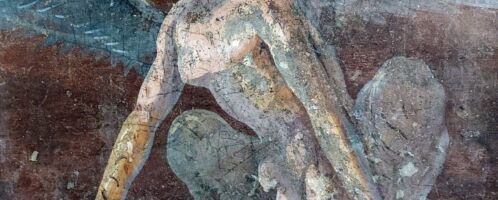
Sphinx on a Roman fresco. Object discovered in Pompeii. Dated to the 1st century BCE. The artifact is located in the National Archaeological Museum of Naples.

Sphinx on Roman fresco

Pantheon and secrets of its creators

Pantheon seems to be a perfect building – entire volumes have been written about the perfection of its dome. Next: about the proportions of its rotunda. When we stand close to a temple, we usually do not pay attention to certain irregularities in its shape. Yet some experts note that during the construction of the Pantheon, not everything probably went according to the architects’ intentions.

Pantheon | Author: Tomasz Podkowa

Roman mosaic showing boxing match

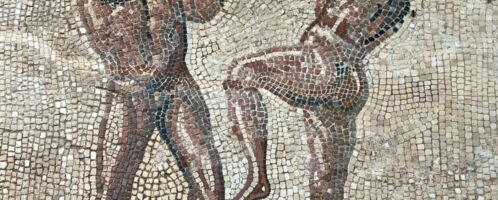
Roman mosaic showing a boxing match. The object was discovered on the site of the Roman Augusta Treverorum (present-day Trier, in western Germany). Dated to the mid-4th century CE. The artifact is located in the Rheinisches Landesmuseum in Trier.

Roman mosaic showing boxing match

Roman colander

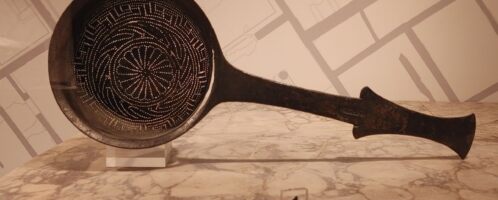
Roman colander, made of bronze, discovered in Herculaneum. The object is on display in the museum in Herculaneum. The colander was used, among other things, to strain and cool wine and other liquids with snow1.

Roman colander

Mithra killing bull on relief

Roman relief from the 3rd century CE showing Mithras killing a bull. When the photo was taken, the object was on display at the National Archaeological Museum of Naples.

Mithra killing bull on relief

Spelling error report

The following text will be sent to our editors: