If you have found a spelling error, please, notify us by selecting that text and pressing Ctrl+Enter.

Curiosities of ancient Rome

The world of the ancient Romans was rich in extraordinary, and sometimes even surprising, facts. We draw our knowledge of Roman daily life, customs, and mentality primarily from works left by ancient writers and historians. It is thanks to them that we discover information that is astonishing today – sometimes even hard to believe. Below are some interesting facts that reveal a lesser-known and less obvious side of the Roman world.

I encourage you to submit your own suggestions and to report any corrections or inaccuracies.

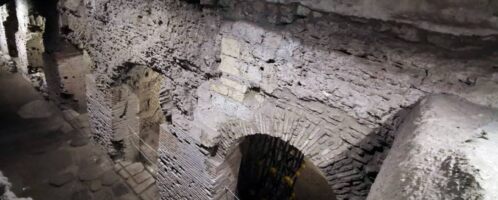
Underground of ancient Neapolis

Contemporary Naples is a city where ancient monuments are much more difficult to find than in Rome, but that does not mean that they are not there. After all, it is a city as old as Rome. Founded by Greek colonists, the settlement already had an urban character when Rome was still a small village.

Macellum under Naples

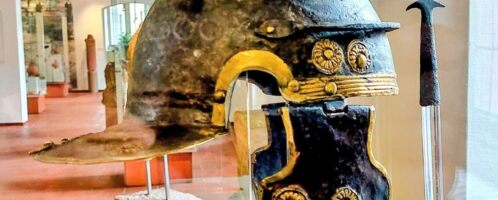
Preserved Roman helmet

Preserved Roman helmet at the Archaeological Museum in Worms (south-western Germany). This is an example of a Roman helmet of the Imperial-Gallic (galae) type.

Preserved Roman helmet

Roman army – bloody, brutal, vengeful…

While we marvel at Rome’s achievements – architecture, mosaics, frescoes, literature and law – the truth is painful: the vast empire was not created by extraordinary coincidence, and the peoples incorporated into it were not consulted. Therefore, although later millions of people living in the Mediterranean basin benefited from the benefits of the Pax Romana and relatively rarely rebelled, this happened only after their ancestors paid with their own blood for the “privilege” of living under the heel of the Romans.

In the photo, a reenactment group of "Roman legionaries" during a historical picnic at the Maxentius Hippodrome in October 2018

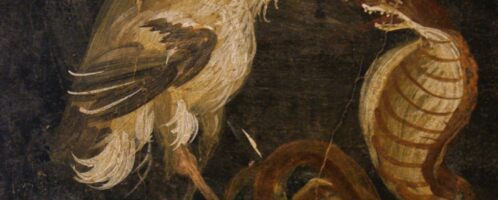
Roman fresco showing fight of heron and cobra

Roman fresco showing the fight of a heron and a cobra. The object was discovered in the so-called House of Epigrams in Pompeii. The artifact is in the National Archaeological Museum in Naples. Dated to the 1st century CE.
Roman fresco showing fight of heron and cobra

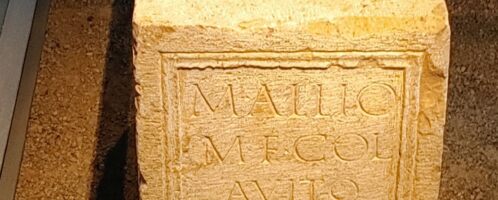
Pedestal from Roman equestrian statue

Pedestal from a Roman equestrian statue from the 1st century CE. The inscription says: “To Marcus Allius Avitus, son of Marcus, of the tribus Collina. The people of Valencia, veterans and elders, dedicate [the statue]. By decree of the decurions.”

Pedestal from Roman equestrian statue

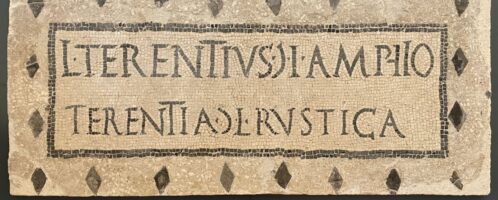
Mosaic from tomb of former slaves

Roman mosaic from the tomb where a couple of former slaves – Amphio and Rustica – were buried. As we can read on the mosaic, the couple got married after liberation. They both received their freedom from their mistress – Terentia – after whom they also took their name. Object dated to the 1st-2nd century CE. Currently stored in the Museo di Santa Giulia in Brescia.

Mosaic from tomb of former slaves

Spelling error report

The following text will be sent to our editors: