Monument to Emperor Antoninus Pius near Wrocław
In the town of Magnice (commune of Kobierzyce) in the suburbs of Wroclaw, a new street has been named after a Roman emperor Marcus Aurelius.
If you have found a spelling error, please, notify us by selecting that text and pressing Ctrl+Enter.
The world of the ancient Romans was rich in extraordinary, and sometimes even surprising, facts. We draw our knowledge of Roman daily life, customs, and mentality primarily from works left by ancient writers and historians. It is thanks to them that we discover information that is astonishing today – sometimes even hard to believe. Below are some interesting facts that reveal a lesser-known and less obvious side of the Roman world.
I encourage you to submit your own suggestions and to report any corrections or inaccuracies.
In the town of Magnice (commune of Kobierzyce) in the suburbs of Wroclaw, a new street has been named after a Roman emperor Marcus Aurelius.

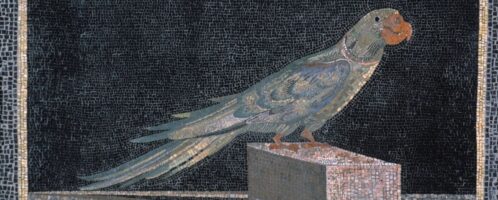
Roman mosaic with a parrot, dating from the 2nd century BCE; currently in the collection of the Pergamon Museum (Berlin, Germany).
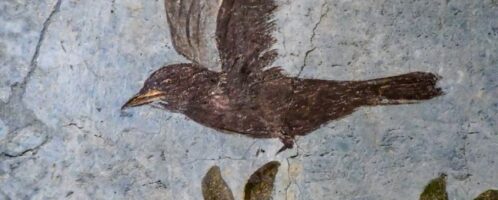
Roman fresco depicting a flying bird. The scene is part of a larger composition from Pompeii.
When we think of the animals that have most influenced the fate of humanity, we likely first place horses – after all, it was on their backs that armies, rulers, and ultimately, multitudes of ordinary people traveled. Perhaps we would think of the dog – the first domesticated animal in history. But in these reflections, we often forget another, inconspicuous creature whose role was no less significant, or perhaps even more significant, than those mentioned above. Since its domestication in North Africa around 6000 BCE, the donkey has become the most important beast of burden in ancient history.

Roman gold ring with a cameo depicting a shrimp. The object dates to the 2nd century CE.

Roman fresco depicting Victoria, the Roman goddess of victory. Dating back to the 1st century CE, it is currently located at the Getty Museum in Los Angeles, USA.

An 800-square-meter Roman mosaic discovered in Antioch, southern Turkey, retains the rippling marks of an ancient earthquake without disturbing its design. The piece was discovered in 2012.

Roman vessel in shape of bear. Dating back to the 3rd or 4th century CE, it was likely filled with oil or perfume. The artifact is located at The Metropolitan Museum of Art in the United States.

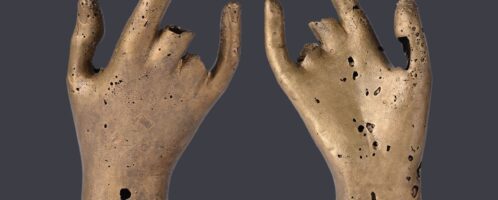
Bronze hand of Jupiter Dolichenus, an enigmatic deity whose cult spread from Syria throughout the Roman Empire. The object is 22.5 cm long and was likely part of a statue of the deity. The artifact was discovered in Ćuprija, Serbia; it is currently housed at the Jagodina Museum in Serbia.