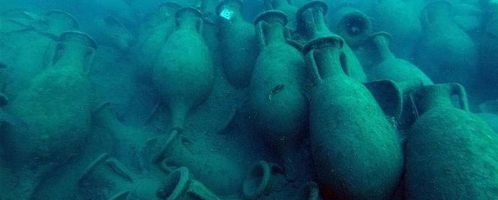
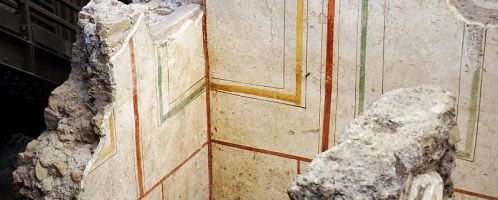
Villa Romana del Tellaro in Sicily
Roman villa, Villa Romana del Tellaro, is located in eastern Sicily, south of the town of Noto. The villa was of an agricultural character, however, it is distinguished mainly by beautiful mosaic floors.
If you have found a spelling error, please, notify us by selecting that text and pressing Ctrl+Enter.
Places are curiosities dedicated to locations related to the world of ancient Rome and antiquity. This category features lesser-known facts, interesting details, and unusual information about the cities, ruins, monuments, and archaeological sites of the Roman Empire, revealing their history and significance in the ancient world.
Roman villa, Villa Romana del Tellaro, is located in eastern Sicily, south of the town of Noto. The villa was of an agricultural character, however, it is distinguished mainly by beautiful mosaic floors.
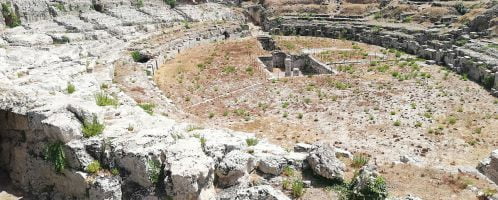
The Roman amphitheatre in Syracuse (eastern Sicily) was the largest of its kind on the island. It was probably built at the end of the 1st-century BCE and was associated with the reconstruction of Syracuse in 21 BCE. It is possible that in the arena apart from gladiator fights and wildlife hunts, naumachia. The object was 140 meters wide and 119 meters long.
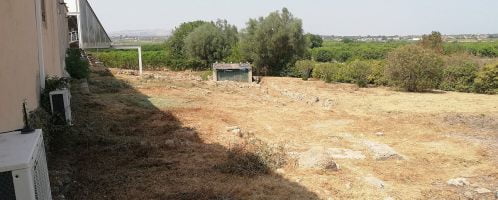
In the central part of Sicily, near the town of Corleone, there are the remains of a Roman villa – Villa romana di San Luca. The facility had an agricultural character and unfortunately it is not available to tourists. The place is neglected and more information about the monument is not available.
Reconstruction of the appearance of the Roman fortress in El-Lajjun (Jordan), which was created after the suppression of the Jewish Bar Kochba uprising in 135 CE.

Roman gate porta Principalis Dextra in Eboracum (present York, England), located to the right of the headquarters (praetorium). In Roman times, there was a Roman camp in the present-day area of the city. Nowadays there is also a pub called “Lamb and lion inn”.

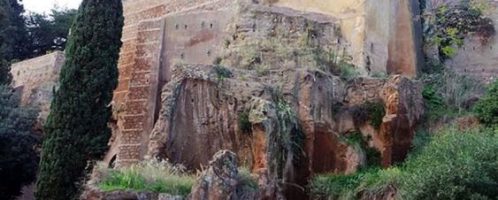
Tarpeian Rock (Saxum Tarpeium) is a rocky cliff on the southern slope of the Capitol, facing the Roman Forum. In the republican times, this place was used for executions – throwing convicts from Rock.
When visiting the Forum Romanum, many people notice flowers placed in the niche of the wall of Caesar’s temple in memory of his memory. This is where Caesar was to be cremated, which is why many people intuitively point to this place as his burial place. But is it possible that the tomb of the dictator is there?

Near Villajoyosa (eastern coast of Spain), at the bottom of the sea, there is a Roman shipwreck (called Bou Ferrer) from the 1st century CE. The vessel is located at a depth of about 25 meters and about 1000 meters from the shore. Since 2013, the wreck has been made available to tourists for sightseeing.