If you have found a spelling error, please, notify us by selecting that text and pressing Ctrl+Enter.

Curiosities of ancient Rome (System and politics)

System and politics offers interesting facts about the system of government, state institutions, and mechanisms of governance in ancient Rome. This category includes lesser-known facts and interesting details related to the functioning of the republic and empire, offices, political decisions, and the behind-the-scenes public life of the Roman Empire.

Republic or empire? – how Octavian Augustus changed system without changing it

Which version of Rome is more interesting to you: the republic or the empire? On the one hand, the severity of customs, and on the other, the debauchery and decadence of the emperors. Here the military genius of Scipio Africanus, the morality of Cato and the brilliant speeches of Cicero, and there – Caligula, Nero and a galaxy of other emperors with more or less twisted psyche.

Octavian Augustus

How private agreement between three men ruined republic…

In 43 BCE a private agreement between three men sealed the fate of the Roman republic. Even before the death of Julius Caesar, the Roman republic was dying out – torn apart by the ambitions of successive great leaders and the civil wars they caused. But after the Ides of March, her agony accelerated rapidly. But formally it still continued – consuls and other officials were still elected, and the Senate continued its sessions. People’s assemblies were then convened…

Second triumvirate

Two-headed Rome – about Roman consuls and their election

During the Republic, consuls were the highest state officials elected by a popular assembly called centurial committees (comitia centuriata). The election of consuls was the most important day in the Roman political calendar. When the empire later came, the office of consul became an honorary title, and centurial commissions died out. How did this happen?

Roman in a toga, in the position of an orator

Dictator and magister equitum – a unique case

In Roman Republic there could be only one dictator. But for a short time in the most turbulent period in the history of Rome a single exception took place. Commander of the cavalry appointed by Quintus Fabius Maximus gained power equal to that of the dictator.

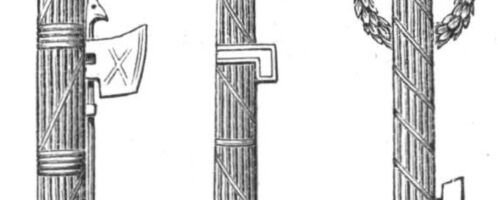
Roman fasces

Lex Annalis – regulation of cursus honorum

Lex Annalis was the law which decisively regulated the order of office (cursus honourum) in the Roman Republic. Moreover, it set the minimum age that a Roman citizen must have had to apply for a questorship. The requirement was 26 years of age and 10 years of military service.

Gaius Gracchus summoned by the senate, Pierre-Nicolas Brisset

Roman-Carthaginian relations before Punic Wars

There is much talk about the Punic Wars that took place between the Roman Republic and Carthage, also known as Kart Hadasht, or the city of Dido. In the years 264-146 BCE, there were three conflicts between these ancient powers which led to Rome defeating and absorbing its rival. Before that, however, both sides were not hostile to each other, and even on the contrary – they were in good relations.

Carthage ruins

Queen Teuta and piracy

Queen Teuta was regent of the kingdom of the Ardiai from 230-228 BCE and ruler of part of the state with the capital in Rhizon in the years 228-217 BCE. On the Dalmatian shores of her country, pirates found comfortable ports and support.

The kingdom of Illyria (yellow) during the reign of Teuta

Spelling error report

The following text will be sent to our editors: