If you have found a spelling error, please, notify us by selecting that text and pressing Ctrl+Enter.

Curiosities of ancient Rome (System and politics)

System and politics offers interesting facts about the system of government, state institutions, and mechanisms of governance in ancient Rome. This category includes lesser-known facts and interesting details related to the functioning of the republic and empire, offices, political decisions, and the behind-the-scenes public life of the Roman Empire.

Exarchate of Africa

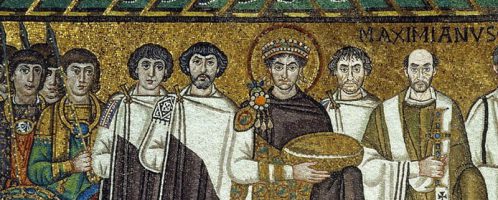
The Exarchate of Africa, also known as Carthaginian, was an administrative region in the Byzantine Empire including Mauritania, Numidia, Proconsular Africa, Sardinia, Corsica, the Balearic Islands and part of the southern coast of today’s Spain, founded by Emperor Maurice around 590 CE.

African Exarchate

Evasion of office by certain rhetorician

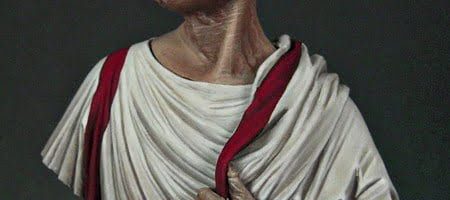
Not everyone in ancient Rome dreamed of holding high and prestigious offices. Retor and sophist from the 2nd century CE Aelius Aristides, a Greek from Asia Minor, one of Asclepius’ most ardent followers, is an example of persistent avoidance of service to the state, and he did it extremely effectively.

Evasion of office by a certain rhetorician

Evolution of power after the principle

In the third century CE the rulers of Rome began gradually to depart from the appearances of the Republic. The growing political ambitions of the emperors led to the expulsion of the rest of the institutions. Aurelian introduced the dominant system in the second half of the 3rd century CE, taking the title dominus et deus (“Our Lord and God”). Diocletian made at the end of the 3rd century CE reconstruction of the state administration, creating a tetrarchy system.

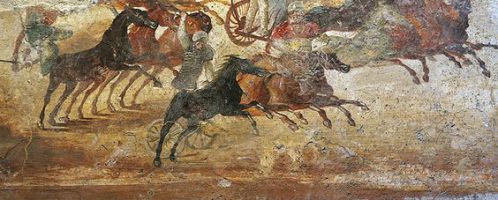
A chariot race in a Roman fresco

Spelling error report

The following text will be sent to our editors: