If you have found a spelling error, please, notify us by selecting that text and pressing Ctrl+Enter.

Curiosities of ancient Rome (Unknown facts)

Unknown Facts are curiosities revealing little-known, surprising, or rarely discussed information from the world of ancient Rome and antiquity. This category includes unusual details, curiosities, and facts that offer a less obvious perspective on the Roman Empire.

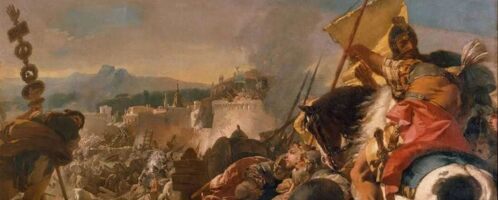
Mighty Pompey the Great

The conquests of Gnaeus Pompey in the east were so spectacular that the living at that time compared the Roman commander to the famous Alexander the Great – hence he later adopted the nickname “the Great”, meaning Magnus. His strength and political significance grew so much that in practice he was the independent king in the years 66-62 BCE.

Pompey the Great

Roman women were educated

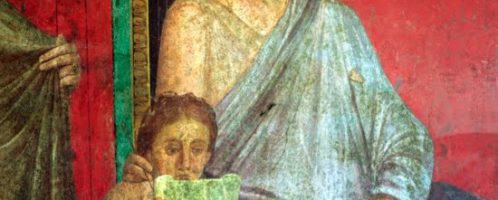
In ancient Rome, it was appropriate for a woman in upper and middle social classes to be able to read and write. Sometimes the family invested in girls even more and provided private Greek or grammar classes.

Fresco showing a girl reading papyrus. Dated to the 1st century BCE

Fullones in ancient Rome

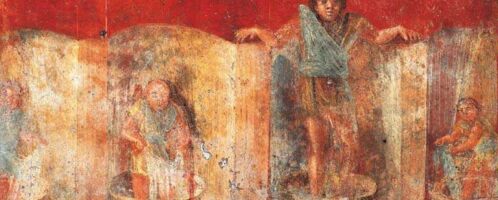
Roman fullones were supposed to both clean and smooth the material after receiving it from the weaving workshop, as well as clean the clothes from dirt and bleach or enhance the colour. Fuller workshops were called fullonicae.

Fresco showing fullers at work. The painting was in Pompeii, in the  workshop of Veranius Hypsaeus.

Rhapta – ancient market in south-east Africa

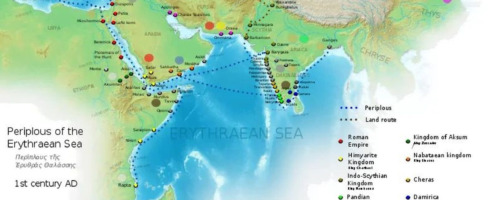
In the famous “Periplus of the Erythraean Sea”1 – a manuscript from the turn of the 1st century CE, which served merchants navigating the waters between East Africa and India – we can find a place called “Rhapta”, which is described as “the last marketplace of Azania” and was located two days south of the so-called Menouthias Islands (it is suspected that it could have been Zanzibar, Mafia or Pemba).

Map based on the Periplus of the Eritrean Sea

Did Roman legionaries sing songs during march?

Life in the army has always been hard and required soldiers to have strong will, perseverance and physical strength. Long and demanding marches caused the soldiers to try to diversify time in various ways, including singing. Did Roman legionaries do the same?

Did Roman legionnaires sing songs during the march?

Medieval monks saved many works

If there were no medieval monks and copyists, many important ancient works would not have survived to our times. Copyist’s work efficiency was 3-6 cards in quarto per day – in Quarto in letterpress it is a double-folded sheet of paper that consists of four cards and eight pages. It took a year to rewrite, for example, the “Bible”. A copyist could rewrite 40 works in his lifetime.

Medieval monk in the painting

Spelling error report

The following text will be sent to our editors: