If you have found a spelling error, please, notify us by selecting that text and pressing Ctrl+Enter.

Curiosities of ancient Rome (Unknown facts)

Unknown Facts are curiosities revealing little-known, surprising, or rarely discussed information from the world of ancient Rome and antiquity. This category includes unusual details, curiosities, and facts that offer a less obvious perspective on the Roman Empire.

Wonderful Gardens of Maecenas

The famous “Gardens of Maecenas” ( Horti1 Maecenatis), as the name suggests, arose on the initiative of Gaius Cilnius Maecenas, patron of art and culture in ancient Rome at the end of the 1st century BCE. They were one of the first such beautiful gardens in Rome; their creation was modelled on their Hellenistic and Persian counterparts.
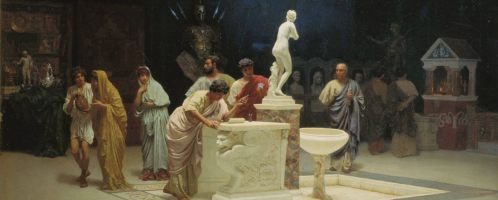

Stefan Bakałowicz, At the Patron

Sub rosa – meaning “secret”

Rose in ancient times had a very important symbolic meaning. This flower was associated with numerous religious rituals, imposing the obligation of secrecy on all persons participating in the ceremony.

Sub rosa - meaning "in secret"

First libraries in world

The first libraries in the world began to be created in Mesopotamia and Egypt; one of the first and most famous Greek libraries were created at the courts of tyrants – Polycrates on the island of Samos and Peisistratos in Athens in the first half of the 5th century BCE.

Celsus Library in Ephesus

What was fashionable in the 2nd century BCE in Rome?

In the 2nd century BCE three people lived in Rome who promoted a lifestyle based on bathing, drinking a falern (tart and strong wine produced in Campania) and eating oysters from Lake Lucrinum in Campania. They were Sergius Orata, a worldman and inventor of oyster farming, the aristocrat Lucius Cornelius Crassus and the well-known doctor Asclepiades from Bithynia.

Oyster

Roman students wrote on wax tablets

Roman students practised writing on wax tablets using a sharp stylus. They could then wipe out the wax and use the tablet again. Such tablets were also very popular in Greece and the Middle East. They were widely used in administration, treasury and judiciary, bills and various types of registers were written on them.

Roman writing tablet

Vain Cicero

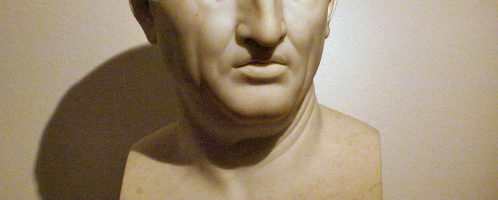
To this day Cicero appears to us as a model of an ideal politician, lawyer and speaker, standing up for his homeland and his clients. Detection of the Catilinarian conspiracy in the late 60s of 1st century BCE brought Cicero enormous glory and splendor, which, however, led him to a pathetic vanity.

Cicero

Dangers in Roman toilets

Ancient Rome appears to us as one of the civilizations that became famous for achievements in the field of sewage and hygiene. However, despite the presence of sewers and public toilets, there was some fear among the Romans when they thought of the toilets.

Roman mosaic showing the fight between octopus and cancer

Spelling error report

The following text will be sent to our editors: