If you have found a spelling error, please, notify us by selecting that text and pressing Ctrl+Enter.

Curiosities of ancient Rome (Unknown facts)

Unknown Facts are curiosities revealing little-known, surprising, or rarely discussed information from the world of ancient Rome and antiquity. This category includes unusual details, curiosities, and facts that offer a less obvious perspective on the Roman Empire.

Traffic jams in ancient Rome

In ancient Rome, as today, there were traffic jams, which the authorities tried to remedy in various ways. The streets of Rome were crowded with both pedestrians and sledges. The Eternal City was problematic in terms of traffic because of: irregular city buildings, high population density and warm climate, which encouraged people to leave their homes.

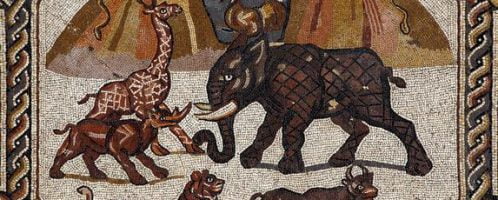
Roman mosaic showing transport of animals to games

Caritas Romana

Caritas Romana (“Roman Charity”) is the story of a woman named Pero, secretly breastfeeding her father Cimon after he was condemned to death by starvation. After the discovery of the daughter’s dedication (pietas) Cimon was pardoned.

Caritas Romana

Vespasian was a good emperor

Emperor Vespasian was known for his intelligence, sympathetic manner, and commanding skills. In the case of natural disasters, he supported poorer senators or equites. Generally, he was generous towards writers and rhetorics, who were paid 1000 gold a year. The first to receive such a grant from the ruler was Quintilian – a public teacher. Pliny the Elder, in turn, his main work “Natural History” was written during the reign of Vespasian, and he dedicated it to the son of the emperor, Titus.

Vespasian

Salt – expensive commodity in Roman times

Salt in Roman times was an extremely valuable commodity, mainly due to the fact that it was used for food preservation. This, in turn, encouraged the Roman authorities to impose large taxes on salt or after the monopolisation of the market. Pliny claims that Roman legionaries sometimes received pay in the form of salt allocation. Therefore, the phrase “worth one’s salt” is commonly used in English.

Roman salt

Promiscuous Romans

The ancient Romans might have been less promiscuous than the Greeks, what does not mean that in the public sphere they did not allow themselves to make sexual comments. For example, in Pompeii, graffiti made on the walls of buildings can still be read today. One of them: “Weep, you girls. My penis has given you up. Now it penetrates men’s behinds. Goodbye, wondrous femininity!”

Roman graffiti

Hair coloring in Roman world

Almost every Roman lady dyed her hair. Some have oxidized and lightened, others have darkened. For example, for dark hair, the prescription was taken over from the Egyptians, for whom black color on the head was an expression of beauty. In order to darken the hair, a mixture of lead oxide, slaked lime (calcium hydroxide) and water was used. A paste was thus obtained, which was then rubbed into the head.

Livia

Spectacles in Colosseum

The Flavian Amphitheater was an amazing construction for ancient times. The engineers took care of every detail to such an extent that they even anticipated the possibility of spreading a special canvas roof that was stretched over the stands on hot days. It was referred to as velum or velarium. The audience could also count on another form of coolness.

Velarium

Performances of wild animals in Roman arenas

The performances of wild animals in the Roman arenas certainly aroused excitement in the viewers. Roman politicians were able to get support from the crowds by bringing huge amounts of animals, which then offered entertainment to the crowds. We know many stories and ways to create a spectacle. Some of them were really inhuman.

Roman animals

Tabularium – Roman archive

Tabularium was a Roman state, military, temple, city archive, etc., in which the most important documents and legal acts were stored and legal acts written on tablets, rolls of papyrus and parchment. Such an archive was initially administered by censors, and later by specially appointed curators.

Tabularium

Which Brutus?

According to some sources, Caesar, seeing among the conspirators Brutus, was to exclaim, “You too, child?”. Was it really so, we are not sure. However, even if in fact it was so, we are not sure which Brutus – of the two involved in the plot – would be addressed.

Marcus Junius Brutus

Spelling error report

The following text will be sent to our editors: