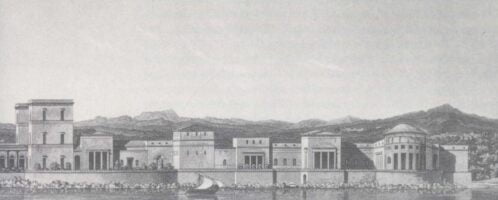
Reconstruction of villa of Pliny the Younger
Reconstruction of the villa Pliny the Younger in the city of Laurentum, in Latium, between Ostia and Lavinium.
If you have found a spelling error, please, notify us by selecting that text and pressing Ctrl+Enter.
Reconstruction of the villa Pliny the Younger in the city of Laurentum, in Latium, between Ostia and Lavinium.
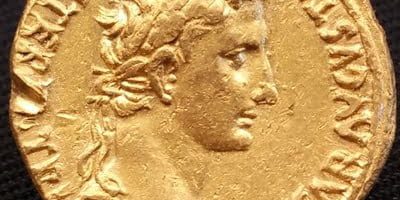
At the bottom of the eastern port of Alexandria, 3 Roman shipwrecks, an Egyptian votive candle for the god Osiris, and some minor artefacts were discovered.
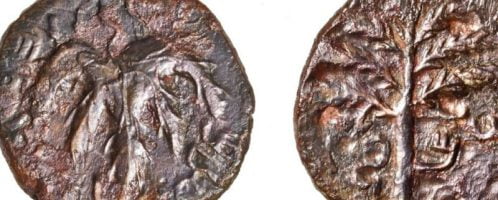
Scientists found a bronze coin that dates back to 132 CE, the moment of the famous Jewish uprising, the so-called Bar-Kochba rebellion that targeted the Roman occupation. Until now, scientists believed that the insurgents were not supported by the local population north of Jerusalem, in the mountainous region of Samaria. As it turns out, the discovered artefact proves that the extent of the revolt was greater than previously thought.
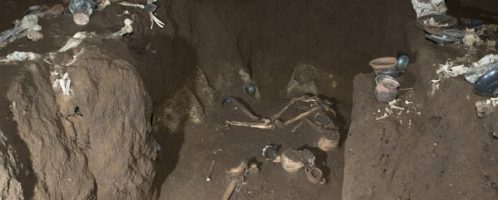
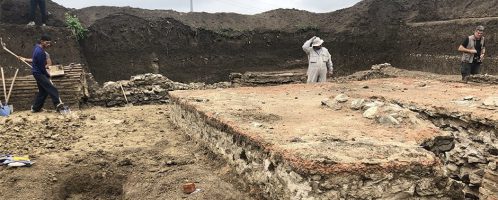
In eastern Serbia, the remains of a Roman mausoleum from the 3rd century CE were found. The discovery took place at an excavation site in Viminacium, east of Belgrade, near the town of Kostolac.
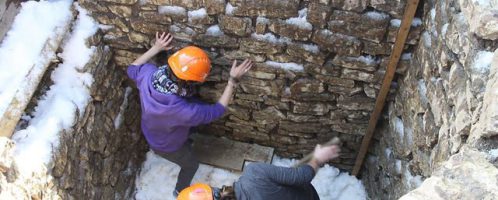
In 2018, in the Swiss city of Kaiseraugst (the northern part of the country), which in Roman times was called Augusta Raurica, scientists found an interesting example of a Roman house. Namely, it had a storage box that, according to researchers, could serve as an antique refrigerator. Due to the assumptions, reconstruction works have been started.
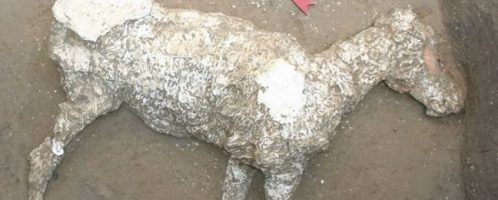
Archaeologists have discovered the remains of an ancient Roman villa in Pompeii, with the remains of the first horse in Pompeii. Excavation work began last year, in August.
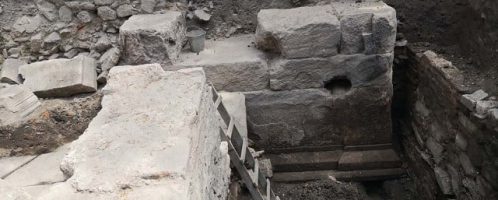
Archaeologists have discovered the foundations of the Roman triumphal arch in ancient Trimontium (the present city of Plovdiv in Bulgaria).
In 2018, Polish scientists in Albania found the remains of the lost city of Bassania. This center may have been destroyed by the Romans at the turn of the century.